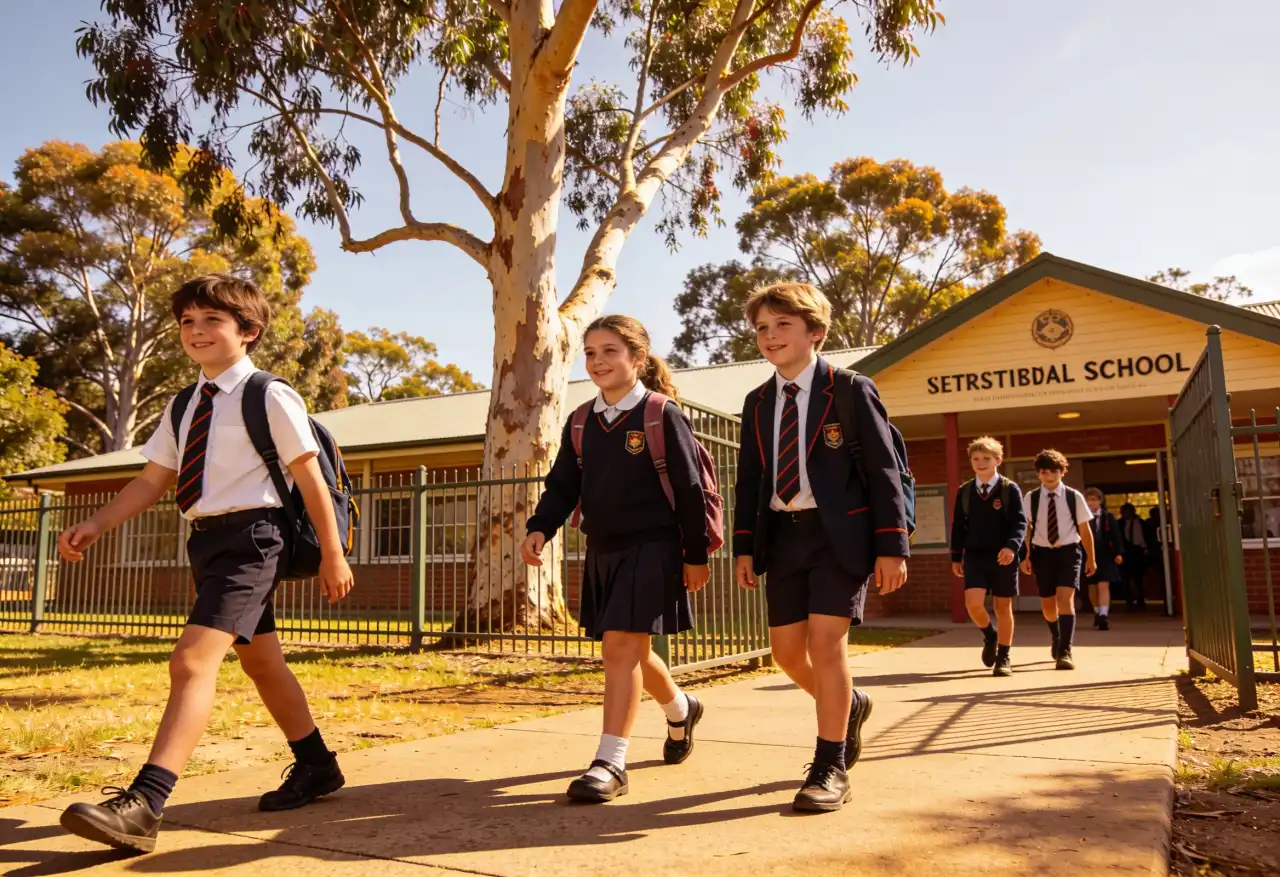
Sending children to school in Australia is a top concern for many Vietnamese families settling there. The education system is divided into several types of schools with very different cost levels, and understanding this structure helps you choose the right environment for your child.
Australian education is highly regarded and is one of the reasons many families choose this country. However, how schools and classes are organized, enrollment ages and fees differ significantly from Vietnam. Newcomers are often confused between public, private and Catholic schools, or between school levels with unfamiliar names.
This article outlines the whole landscape of Australia’s school education system, from preschool through the end of secondary school, along with the types of costs and enrollment procedures. Because tuition fees and enrollment rules vary by state, you should use this article as a general map and then check the details with the education department of the state where you live.
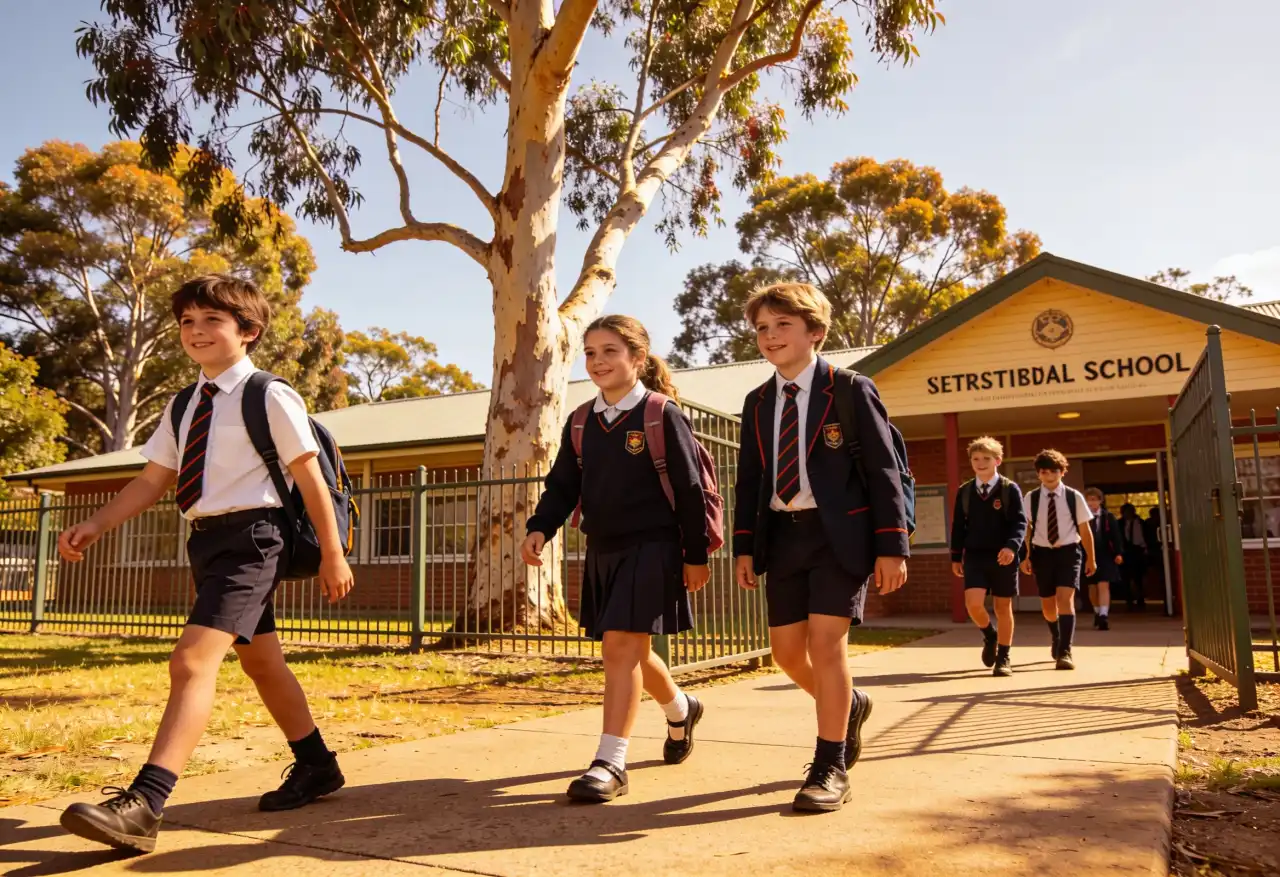
sending children to school in Australia — illustrative image.
Contents
School levels when sending children to school in Australia
When sending your child to school in Australia, you will find a fairly clear system of levels, though names and ages may vary slightly between states. Children usually begin formal education in the Foundation year, followed by primary and secondary school.
- Preschool and childcare: for children before school age, including childcare and preschool/kindergarten depending on the state.
- Foundation year (Foundation/Prep/Kindergarten): the first year before Year 1, with names varying by state.
- Primary school: usually from the Foundation year to Year 6.
- Secondary/High school: usually from Year 7 to Year 12.
Education in Australia is compulsory up to a certain age, after which students can continue into the senior years of secondary school, move into vocational training, or enter the workforce. The final two years of secondary school are very important, as results affect university admission.
The school year and how classes are grouped
The school year in Australia begins around late January or early February and ends in December, divided into four terms with breaks in between. This is a major difference from Vietnam, where the school year starts in autumn. Children are grouped mainly by age rather than ability, so your child will usually enter the level matching their age even if newly arrived.
For children not yet fluent in English, many schools and states offer an English as an Additional Language program. Some places arrange dedicated English classes at first before children join mainstream classes. You should ask the school about this program clearly when enrolling.
Public, private and Catholic schools
Australia’s school system is divided into three main groups, each with its own philosophy, cost and admissions approach. Understanding the differences helps you weigh your budget against your aspirations for your child.
Public school (government/public school) run by state governments. For permanent residents and citizens, public schools are essentially free of tuition, though parents still pay voluntary contributions, uniforms, supplies and extracurricular activities. Enrollment is generally tied to your area of residence: your child is given priority at the public school in the catchment area where the family lives. This is why many families choose where to live based on the quality of the nearby public school.
Catholic school part of the diocesan system, charging moderate tuition fees, usually lower than independent private schools. In many places these schools accept students regardless of religion, though Catholic families are given priority. This is a balanced choice between cost and a disciplined environment, favored by many families.
Independent/private school charges the highest tuition fees, varying widely depending on the school’s reputation. In return, these schools generally offer good facilities, small class sizes and extensive extracurricular programs. The tuition fee can be a significant burden, so you need to weigh it within your overall family budget; the article cost of living in Australia helps you place tuition costs within the broader spending picture.
Costs of sending children to school in Australia
Whichever type of school you choose, you still need to budget for some costs beyond tuition. For public schools, tuition is nearly free for permanent residents, but additional charges still exist and add up over the years.
- Uniforms: most Australian schools require uniforms, including sports uniforms.
- Supplies and books: parents typically purchase these themselves according to the school’s list at the start of each year.
- Extracurricular activities and excursions: excursions and school camps carry their own fees.
- Technology: many schools require students to have their own tablet or laptop from a certain year level.
An important note about residency status: children of holders of certain temporary visas may be charged international student fees even at public schools, depending on the state’s policy. So before moving, you should confirm how your visa status affects your child’s tuition fees. If you are bringing your child as a dependent on a skilled visa, the article bringing your family to Australia on a skilled visa clearly explains the benefits that come with it for children.
Childcare cost support
For children not yet of school age, childcare costs in Australia are quite high and a real burden for young families. The government has a childcare subsidy program for eligible households, with the subsidy amount based on parents’ income and working hours. You should register and check the current subsidy rate with the social services agency as soon as you are settled, as this subsidy can significantly reduce your actual out-of-pocket costs.
Procedure for enrolling children in school
The enrollment process in Australia is relatively friendly to newcomers. For public schools, you contact the catchment-area school directly or submit an application through the state education department. Documents typically required include proof of the child’s age, immunization records, proof of residential address and visa documents.
Immunization records are something to note: Australia has policies requiring children to be up to date on their immunization schedule to be eligible for enrollment or certain benefits. If your child was vaccinated according to Vietnam’s schedule, bring the immunization record so a health provider can cross-check it and add any doses missing under the Australian schedule.
Each state’s education department is the official point of contact for catchment areas, enrollment ages and procedures. Since these rules differ between states and can change, you should check the website of the education department where you settle, and also check visa conditions related to education at Department of Home Affairs.
After secondary school: the next path
After completing secondary school, your child has several options: university, vocational education and training (VET/TAFE), or entering the workforce. Vocational training in Australia is highly developed and closely tied to the labor market, making it a practical choice for many students. Children studying and growing up in Australia also often works in favor of the family’s long-term settlement path.
You should discuss your child’s direction with the school early, especially during the final two years of secondary school, since subject choices at this stage affect the doors open after graduation. Career counselors at Australian schools generally provide dedicated support to both parents and students.
School culture and the role of parents
Australian schools operate at a different pace than many Vietnamese parents imagine. Teaching leans toward encouraging children to ask questions, work in groups and explore independently rather than memorize. Homework at primary level is usually light, and assessment is based on ongoing progress rather than just final exam scores. Vietnamese children accustomed to grade pressure may need time to adjust to this style, but most adapt well and gain confidence.
Parents are expected to be quite involved in school life. Schools typically hold parent-teacher interviews, open days and fundraising events. Proactively contacting your child’s teacher, following notifications through the school’s app and participating when possible helps your child settle in quickly and makes a good impression. Many schools have a parents’ association, a useful channel for newcomers to get acquainted and stay informed.
Safety and anti-bullying are matters Australian schools take seriously, with clear policies. If your child struggles to fit in or with language, you should talk to the school early; there is usually student support staff or a school counselor to help. Cooperation between family and school is the decisive factor in helping your child feel secure during the transition period.
Choosing housing linked to your child’s school
Because public schools prioritize students within their catchment area, the decision of where to rent or buy is closely tied to choosing a school for your child. Many Vietnamese families consider the reputation of nearby public schools before settling on an area to live, since homes within the catchment of a good school tend to have higher rent and prices. This is a trade-off you should factor in beforehand.
Before signing a lease, you should confirm that the address falls within the catchment of the school you are targeting, since catchment boundaries sometimes cut through residential areas in unpredictable ways. State education departments usually have a tool to check school catchments by address. Combining your choices of housing, cost of living and your child’s school into one overall plan will help your family settle in quickly and avoid having to switch schools midway, which is not good for a child’s education.
If your whole family moves together, you should also think about the support network around you: community groups, churches or associations can help your child make friends more easily and help parents share experience raising children in a new environment. Community connection often makes a big difference in a child’s experience during their first years in Australia.
Summary
Sending your child to school in Australia is a decision that should be considered holistically, depending on your educational goals, budget and where the family lives. Public school suits most newly arrived families due to its low cost; Catholic and private schools are options when you want a different environment and can afford it. Whichever direction you choose, confirm how your visa status affects your child’s tuition fees and check the current enrollment rules at the state education department before deciding.
References
This article is compiled from government sources. Immigration regulations and figures may change over time; you should check current information on the official website before making a decision.
Are public schools in Australia free of tuition for immigrants’ children?
For permanent residents and citizens, public schools are essentially free of tuition. However, children of holders of certain temporary visas may be charged international student fees depending on state policy.
When does the school year start in Australia?
The school year starts around late January or early February and ends in December, divided into four terms with breaks in between.
Can a child who is not yet fluent in English keep up?
Many schools offer an English as an Additional Language program, sometimes arranging separate classes at first, helping children integrate gradually.
What documents are needed to enroll a child?
Usually proof of age, immunization records, proof of residential address and visa documents. Immunization records are especially important in Australia.
Do Catholic schools accept students who are not Catholic?
In many places, Catholic schools accept students regardless of religion, though Catholic families are given priority, and tuition is generally lower than independent private schools.