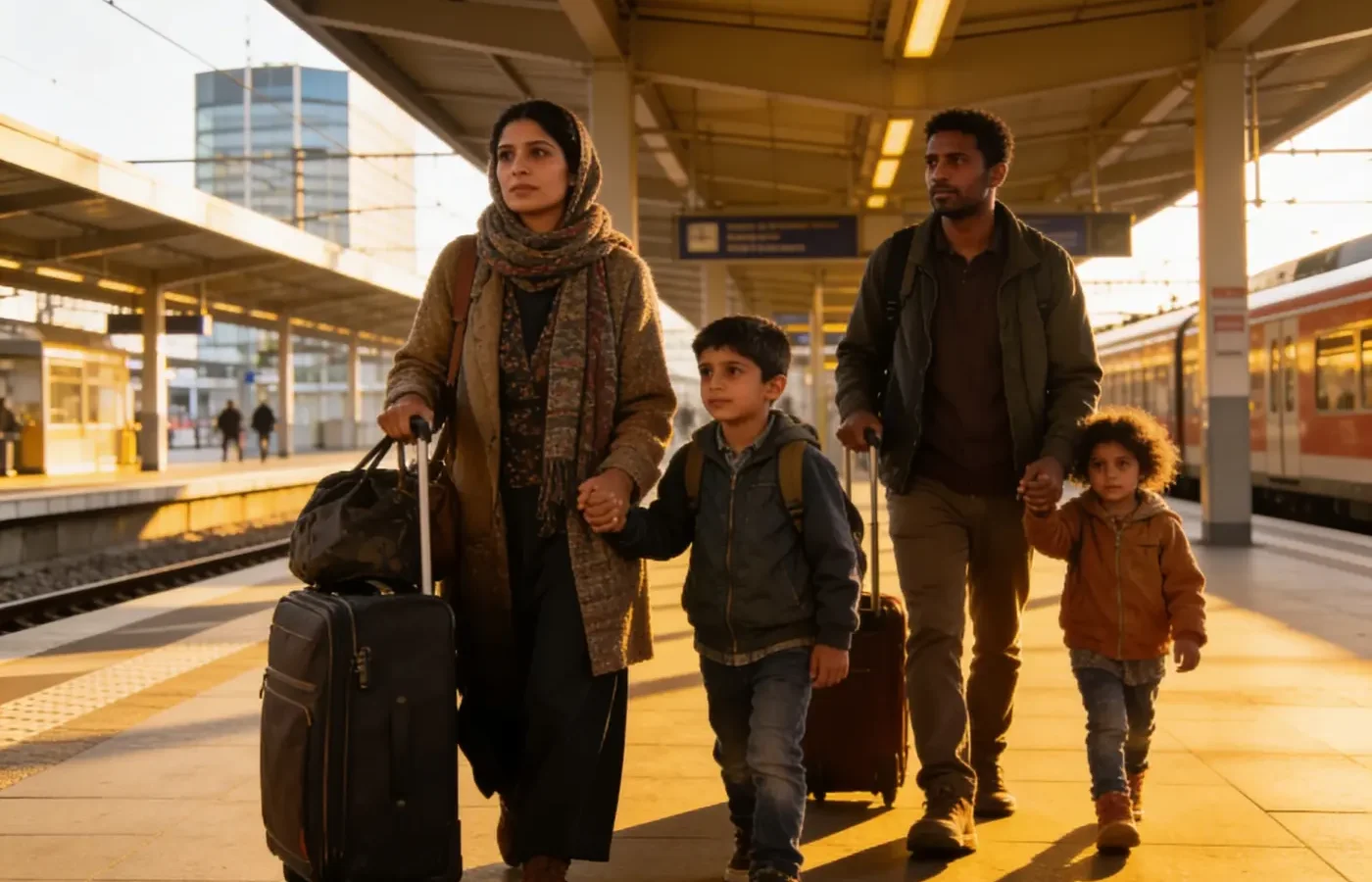
Bringing your family to Germany is the goal of most people settling under a skilled-worker pathway. Germany has a fairly favorable family reunification mechanism (Familiennachzug) for the spouse and children of a skilled worker. Understanding the conditions correctly helps you plan for the whole family from the start.
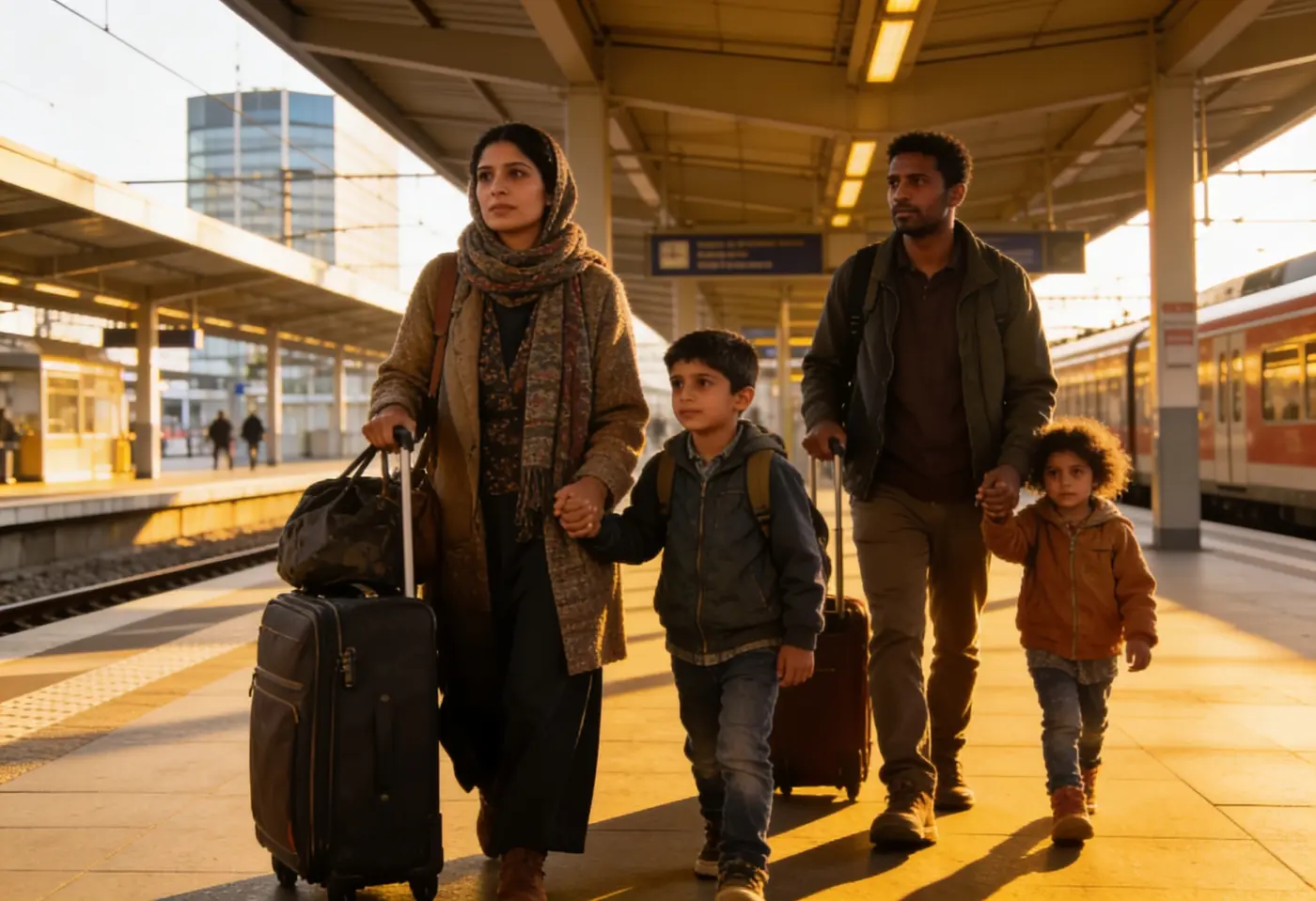
bringing family to Germany – illustrative image.
Contents
How the family reunification mechanism works in Germany
Under Germany’s Residence Act (Aufenthaltsgesetz), bringing family to Germany is called Familiennachzug, meaning family reunification. The general principle is: when a person holds a valid residence permit for work, their spouse and minor children can apply for a visa and residence permit to come and live with them.
Germany views family reunification as an essential part of its policy for attracting talent. A worker is unlikely to stay committed long-term if separated from their family, so regulations in recent years have tended to make things easier for the family members of skilled workers, especially those holding an EU Blue Card or a specialized work permit.
To get the overall picture before going into detail, you can also refer to the article on the cost of living in Germany, since the ability to support a family is one of the conditions considered.
Who is considered a family member
The skilled-worker reunification pathway generally applies to the following close family members:
- The lawful spouse of the worker residing in Germany.
- Dependent minor children, including stepchildren and legally adopted children in many cases.
- In certain special situations, other relatives such as parents may be considered, but the conditions are much stricter and this is not a common pathway.
An unmarried partner (cohabiting without marriage) is generally not covered by the standard skilled-worker reunification pathway. So if the two of you plan to settle in Germany together long-term, completing a legal marriage before submitting the application will make the reunification path clearer.
Main conditions for bringing family to Germany
When seeking to bring family to Germany, the competent authority generally reviews three core groups of conditions placed on the sponsor (the person already in Germany) and the family members:
1. The sponsor holds an appropriate residence status
The person in Germany needs a valid residence permit, usually tied to skilled employment or an EU Blue Card, with enough time remaining to sponsor a family member. The more stable the status, the more favorable the reunification application.
2. Adequate housing and financial capacity
The family must show they have housing large enough for the number of members and sufficient income to cover living costs without relying on social benefits. This is why income, the rental contract, and health insurance for the whole family are typically part of the application package.
3. German language requirement for the spouse
This is a point Vietnamese applicants need to pay close attention to. Normally, the spouse joining via reunification must demonstrate basic German proficiency (A1 level). However, the law includes an important exception: for family members reuniting with a skilled worker holding a valid residence permit, the requirement to prove A1 before arrival is waived in many cases. The exception also applies to the spouse of an EU Blue Card holder, a researcher, or a university degree holder. Since this regulation has been amended before and may continue to change, you should check the current rules at the official source.
According to the guidance of Make it in Germany belonging to the German Government, the requirements on language, housing, and finances are described in detail for each group of family members.
Benefits for family members after arriving in Germany
An appealing feature of the German system is the broad rights granted to family members after reunification. A spouse joining via reunification with a skilled worker is generally allowed to work immediately, without the occupational restrictions found in many other countries. This is a major advantage for families where both partners want to build a career.
Children gain access to the public education system, which is tuition-free in most states. The whole family also joins the health insurance system, an important pillar of social security. To understand this part better, you should read more about health insurance in Germany for newcomers và bài sending children to school in Germany.
Documents usually required
The reunification application generally revolves around proving the family relationship and meeting the living-condition requirements. Common document groups include:
- Documents proving the relationship: marriage certificate, children’s birth certificates, legalized and translated as required.
- Documents from the sponsor: residence permit, employment contract, income confirmation.
- Proof of housing: rental contract or property documents matching the required floor area.
- Health insurance for family members.
- The spouse’s German language certificate, if not covered by an exemption.
Since Vietnamese documents need to be legalized and translated, you should prepare early. This step usually takes longer than newcomers expect, especially for older birth certificates and marriage certificates.
Two ways to bring family to Germany: together or in stages
There are two common strategies for bringing family to Germany. The first is for the whole family to apply and move together at once. This is convenient for reunification but requires that all housing and financial conditions be ready from the start.
The second is for the worker to go first, settle into the job and housing, then sponsor the spouse and children to follow later. This reduces the initial pressure and usually makes it easier to prove housing and income conditions, since there is already an actual employment contract and housing in Germany.
Which approach to choose depends on circumstances: whether children are of school age, the spouse’s job in Vietnam, or immediate financial capacity. There is no single right answer for every family.
A note on the child’s age
The reunification pathway for children generally applies to minors. As a child gets closer to adulthood, the reunification conditions may become stricter or take integration ability into account. So if the family has an older child, you should plan early to avoid the child passing the age threshold while the application is still pending.
How the reunification visa process usually unfolds
Understanding the sequence will help ease your concerns. While details vary by circumstance, the reunification process generally goes through these main steps:
- The sponsor in Germany secures a stable residence status, job, and housing that meet the requirements.
- The family member in Vietnam books an appointment and submits the reunification visa application at the German representative office.
- The application is forwarded to the Foreigners’ Authority (Ausländerbehörde) in Germany for review, sometimes requiring this authority’s consent.
- Once the visa is granted, the family member travels to Germany and completes residence registration and applies for a residence card (Aufenthaltstitel).
Some steps can take time, especially booking appointments and processing the application. So you should start preparing documents as soon as the sponsor’s residence status is stable, rather than waiting until everything is ready to gather the paperwork.
Proving financial capacity: best understood qualitatively
The financial requirement is meant to ensure the family can support itself without relying on benefits. Authorities generally weigh total income against the cost of living and family size, along with housing and insurance costs. Since the specific thresholds and calculation methods are adjusted periodically, you should check the current level at the official source rather than relying on a fixed figure.
In practice, a worker with a long-term contract and a stable salary usually meets this requirement fairly easily. This is another reason to consider the strategy of the worker going first, settling into the job, and then sponsoring family members.
Health insurance for family members
Every family member joining through reunification needs valid health insurance in Germany. In many cases, a worker’s family members are covered under the family plan of the public health insurance system, a notable advantage. You should check the specific conditions with your insurer and read more about health insurance in Germany for newcomers to understand the benefits for the whole family.
Integration support for family members after arrival
Successful reunification doesn’t end when the family member sets foot in Germany – it continues through the integration journey. Germany has an official integration program called the integration course (Integrationskurs), which includes a German language component and an orientation component covering law, culture, and daily life. A newly arrived spouse is encouraged, and in many cases has the right or obligation, to take this course.
For families, this is a dual opportunity. The spouse improves their language level to start working sooner while also building relationships beyond the Vietnamese community. Children integrate quickly through school and friends, and typically pick up German very fast. You should treat language learning for the whole family as a priority investment from the very first months.
To better understand the broader picture of life and support networks, you can read the article on the Vietnamese community in Germany, where many families find support during the transition period. A well-prepared start helps the whole family settle in faster and build a lasting connection to their new life.
Quick comparison with reunification pathways in other countries
Every country has its own approach to reunification. Germany’s strengths are the broad right to work for spouses and the exemption from language requirements for many family members of skilled workers. If you are weighing several destinations, the article bringing the whole family to settle: which country is most favorable will help put Germany alongside other options fairly.
The important thing is not to choose a destination based solely on reunification conditions, but to look at the whole picture: career opportunities, credential recognition, cost of living, and the long-term settlement path for the whole family.
Summary
Bringing family to Germany under a skilled-worker pathway is a relatively favorable route: a spouse and minor children can reunite through the Familiennachzug mechanism, with several exceptions waiving the German language requirement for family members of skilled workers. Depending on your goals, occupation, and family circumstances, you may choose to bring the whole family at once or in stages; the key is to prepare documents early and check the current requirements at the official source before deciding.
References
- Make it in Germany – Family reunification (German Government)
- German Federal Ministry of the Interior (BMI) – Immigration
This article is compiled from government sources. Immigration regulations and figures may change over time; you should check current information on the official website before making a decision.
Does a spouse reuniting with a skilled worker in Germany need an A1 language certificate?
In many cases, no. The law waives the requirement to prove A1 before arrival for family members reuniting with a valid skilled worker, EU Blue Card holder, researcher, or university degree holder. You should verify your specific circumstances.
Can a spouse who comes to Germany through reunification work?
Yes. A spouse joining a skilled worker through reunification is generally allowed to work immediately and is not restricted to a specific occupation – a major advantage of the German system.
Can an unmarried partner be brought to Germany under the skilled-worker pathway?
Generally not. The skilled-worker reunification pathway applies to a lawful spouse and minor children. If you plan to live together long-term, completing a legal marriage before submitting the application will make things clearer.
Should the whole family move at the same time, or should the worker go first?
It depends on circumstances. Going first and sponsoring later makes it easier to prove housing and income since there is an actual job already in place; moving together is more convenient for reunification but requires all conditions to be ready immediately.
At what age can a child reunite with family in Germany?
The reunification pathway applies to minor children. The closer a child is to adulthood, the stricter the conditions, so families with older children should prepare the application early to avoid the child passing the age threshold.