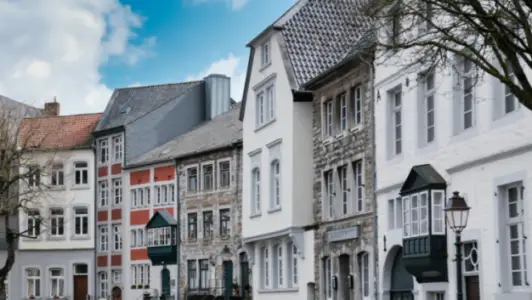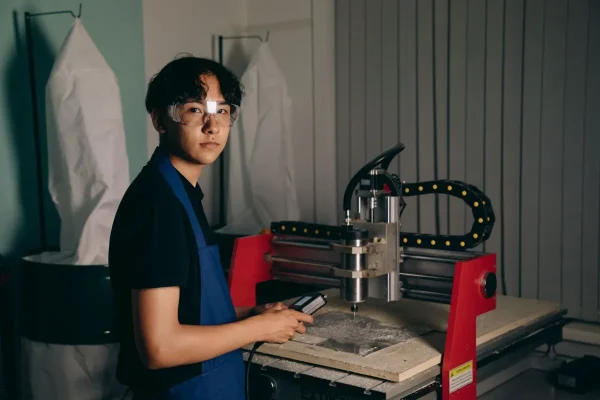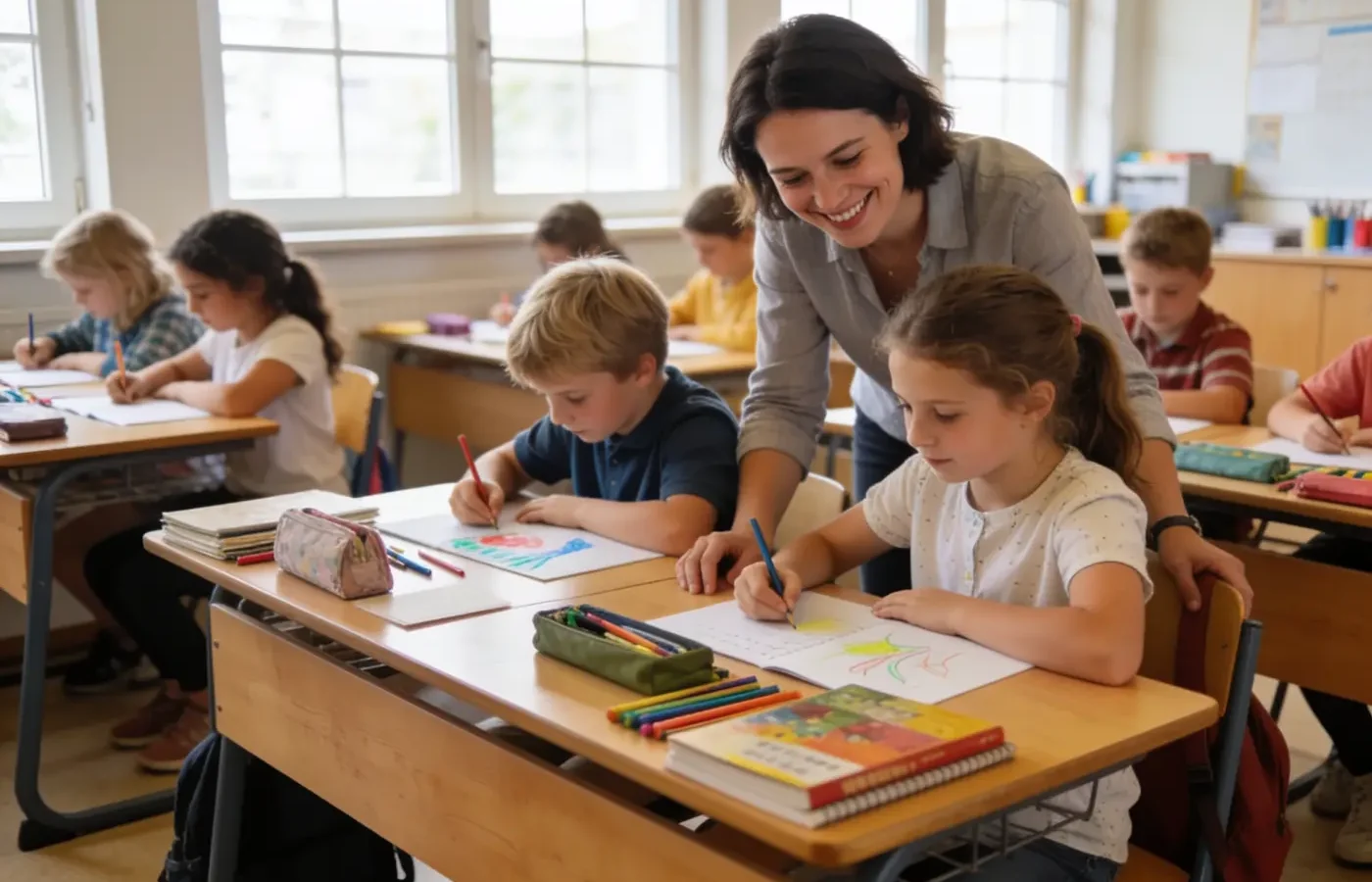
Sending children to school in Germany is a top concern for settling families. Germany’s education system is highly regarded, nearly free of charge at the public level, and tracks students fairly early. This article helps you understand the school levels and how to prepare your child.
One point to note right away: education in Germany is managed by each state (Bundesland), so names, ages and details can vary between states. This article presents the most general framework; once you know where you will live, you should look into that state’s specific regulations. That said, the overall spirit of the system is consistent nationwide, so the principles below are still very useful for orientation.
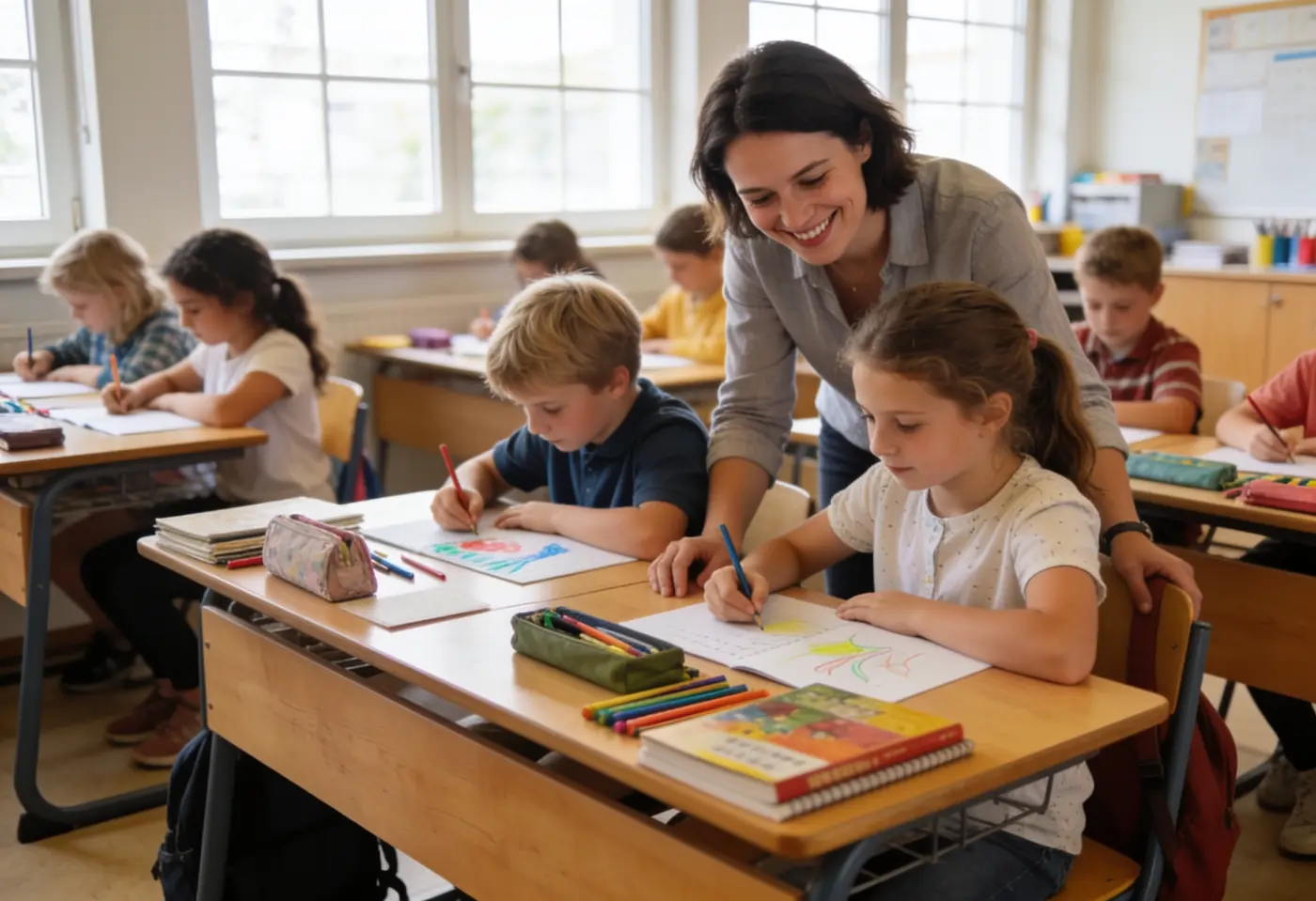
sending children to school in Germany — illustrative image.
Contents
Overview of school levels when sending children to school in Germany
A child’s educational journey in Germany usually moves through clear stages. Understanding this flow helps you picture where your child will be and what to prepare.
- Kita (Kindertagesstätte): nursery and kindergarten, for children before school age.
- Grundschule: primary school, the first compulsory level for every child.
- Secondary school: divided into several school types such as Gymnasium, Realschule, Hauptschule and Gesamtschule.
- Vocational training or university: after secondary school, students choose between dual vocational training (Ausbildung) or university.
Schooling is compulsory by law (Schulpflicht) for children within the prescribed age range. So as soon as your residence is settled, you need to register your child at a suitable school. The German government’s official portal, Make it in Germany, provides a general guide to the school system for internationally employed families.
Kita: nursery and kindergarten
Before school age, German children usually attend Kita. This is where children get used to a group environment, pick up German naturally through interaction, and develop social skills. For children in newly arrived families, Kita is an ideal environment to build language skills before starting primary school.
Kita fees are not uniform across the country. Some states offer it free or at a very low cost, while others charge based on family income and hours of care. Many localities also have support policies to ensure every child has access to Kita. You should register early, as places at good Kitas tend to be in high demand.
Childcare costs are part of the family budget you need to plan for. For an overall picture of the expenses involved in living in Germany, you can refer to the article on the cost of living in Germany.
Grundschule: primary school
Grundschule is the first compulsory level, usually lasting four years in most states. This is the foundational stage, where children learn reading, writing, arithmetic and other basic skills. Classes focus on both knowledge and character development, at a gentle pace suited to young children.
Public Grundschule is tuition-free. You only need to cover incidental costs such as school supplies, backpacks, and sometimes lunch fees or field trips. Children usually attend the school near their residence, so choosing where to live is also tied to choosing your child’s school.
At the end of primary school, teachers give a recommendation on the secondary school track suited to the child’s ability. This is an important step, as it shapes the streaming stage that follows.
Secondary school and streaming
A defining feature of German education is early streaming after primary school. Students are directed into different types of schools based on ability and preference. You need to understand these school types well in order to support your child.
| School type | Focus | Common outcome |
|---|---|---|
| Gymnasium | Academic, prepares for university | Abitur exam, then university |
| Realschule | Intermediate, balances theory and practice | Vocational training or further study |
| Hauptschule | Practice-oriented, basic vocational skills | Ausbildung vocational training |
| Gesamtschule | Comprehensive school, combines multiple tracks | Flexible according to each student’s ability |
Gymnasium is the academic path, ending with the Abitur exam, the qualification that opens the door to university. Realschule is an intermediate path, suited to students who want to balance theory and practice. Hauptschule leans toward vocational skills and practical training. Many states also have Gesamtschule, a comprehensive school that combines the tracks so students can switch direction more flexibly.
You can rest assured that the German system allows switching tracks. A student who starts at Realschule can still go on to earn the Abitur later. So early streaming does not lock in a child’s future — it is only a starting point.
The path after secondary school: vocational training or university
After secondary school, German students have two main directions. The first is dual vocational training (duale Ausbildung), which combines theoretical study at a vocational school with paid practical training at a company. This is one of Germany’s most well-known strengths, producing a skilled workforce and opening up stable employment.
The second is university, for students who hold the Abitur. Public universities in Germany are almost tuition-free, including for many programmes, which significantly eases the financial burden on families. Students mainly need to cover living costs and a small per-semester fee for student services.
For Vietnamese families, the fact that a child can choose either paid vocational training or free university is a major advantage compared with many other countries. This lets children develop according to their strengths without being weighed down by excessive cost pressure.
Helping your child integrate and learn German
The biggest challenge for newly arrived children is usually language. Fortunately, children pick up languages very quickly, especially through the Kita and school environment. Many schools have dedicated German-support classes (often called Willkommensklasse, or integration classes) for students who are not yet fluent, helping them catch up before joining regular classes.
You can support your child by keeping Vietnamese strong at home while encouraging German outside. This bilingualism is a valuable asset for your child’s future. The community of Vietnamese parents in Germany is also a useful resource for exchanging experience.
What to do when registering your child for school
- Complete residence registration (Anmeldung) first, since many school procedures require an address.
- Contact the school near your residence or the local education office to learn the procedure.
- Prepare the birth certificate, passport and previous school records if your child has already attended school in Vietnam.
- Ask about German-support classes if your child is not yet fluent in the language.
Recognition of your child’s prior schooling may also be needed when moving up a level. If you are interested in the assessment of qualifications and academic level for both adults and older children, you can learn more about recognition of Vietnamese qualifications in Germany.
School life rhythm and the parents’ role
Schools in Germany do more than impart knowledge — they also place strong emphasis on students’ independence and responsibility. Children are encouraged to get to school on their own, manage their own schedules, and take part in extracurricular activities. The pace is generally gentler at lower levels and gradually increases in academic pressure at higher grades, especially on the Gymnasium track heading toward the Abitur exam.
Parents in Germany are expected to actively take part in their child’s school life. Parent meetings, school open days and communication channels with teachers are opportunities for you to stay informed about your child’s progress and raise any concerns. Even with limited German, you should still try to attend, as it shows your involvement and helps your child feel supported.
One difference many Vietnamese families need to get used to is that classes often end in the early afternoon, especially at primary level. So if both spouses work full days, you should look into after-school care services (Hort) or all-day schools (Ganztagsschule) in your area to arrange your family schedule accordingly.
Costs to budget for your child’s education
Although public schools are almost tuition-free, families should still budget for a number of accompanying costs to avoid being caught off guard financially. These amounts are not as large as tuition fees in many other countries, but they add up to a notable sum over a year.
| Expense | Nature | Ghi chú |
|---|---|---|
| School supplies | Annual | Books, backpack, supplies |
| School lunch | Recurring | Many areas offer support for low-income households |
| Field trips, activities | Occasional | Class trips, summer camps |
| Kita fee (if applicable) | Monthly | Varies by state and family income |
| Extracurricular activities | Optional | Sports, music, clubs |
For low-income households, Germany has an education and participation support policy (a package covering learning and social inclusion) that helps cover part of the cost of items such as supplies, lunch or extracurricular activities. You should ask at the local authority whether your family qualifies, which can ease the burden of raising and educating your children.
Dual vocational training: a solid career path
Dual vocational training (duale Ausbildung) deserves closer attention, as it is one of the reasons German education is respected worldwide. In this model, trainees study theory at a vocational school (Berufsschule) while also training practically at a company, and receive a wage throughout the training period.
After two to three years, trainees graduate with a nationally recognised vocational qualification and often have the opportunity for immediate employment at the company that trained them. This model closely aligns training with real market needs, so the post-graduation employment rate tends to be high. For many families, this is a practical and secure path, no less so than university.
This is especially worth considering for young people who are more practically inclined than academically inclined. Rather than viewing vocational training as a secondary choice, as was the old perception in Vietnam, you should see it as a path respected by German society, one that opens up stable income and the opportunity to advance to senior professional roles such as master craftsman (Meister).
Summary
Sending your child to school in Germany brings many opportunities: nearly free public education, a flexible streaming system, and open paths through both vocational training and university. Each family should choose the direction that suits their child’s ability and wishes, while also learning the specific rules of the state where they live. Because details vary between states and can change over time, you should always check current information at official sources before deciding.
References
This article is compiled from government sources. Immigration regulations and figures may change over time; you should check current information on the official website before making a decision.
At what age do children in Germany start compulsory schooling?
Germany applies compulsory education law (Schulpflicht) to children within the prescribed age range, usually starting from primary school. The exact age may vary by state, so you should check locally.
How will my child study if they do not yet know German?
Many schools have German-support classes for newly arrived students, helping them get used to the language before joining regular classes. Children also learn languages very quickly through the school environment.
How does Gymnasium differ from Realschule?
Gymnasium is academically oriented and prepares students for university via the Abitur exam, while Realschule is intermediate, balancing theory and practice, and usually leads to vocational training or further study.
Is public university in Germany tuition-free?
Public universities in Germany are almost tuition-free. Students mainly need to cover living costs and a small per-semester fee for student services.
If my child attends Realschule, can they still go to university later?
Yes. The German system allows switching tracks, so a student who starts at Realschule can still go on to earn the Abitur and attend university later.