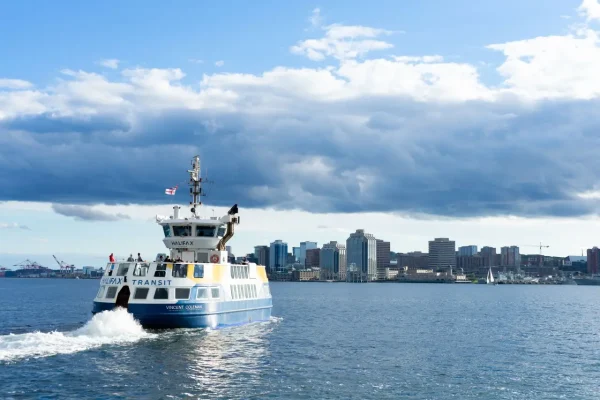
If you are looking for an employer-sponsored permanent residence pathway that is less competitive than the federal draws, the Atlantic Immigration Program (AIP) is a very worthwhile option to consider. This is a regional immigration program reserved for Canada’s four Atlantic coastal provinces. In this guide, the My Second World team will walk you through every step, from the basic requirements to the moment you submit your application.
What is the Atlantic Immigration Program (AIP)
The Atlantic Immigration Program (AIP) is an employer-driven skilled immigration program. Its goal is to help businesses in the Atlantic region hire foreign workers and international graduates when they cannot find candidates domestically.
Unlike many other pathways, the key requirement here is that you must first have a valid job offer. The designated employer then supports your application. This makes it a very suitable path for those who already have, or are about to have, an employer in this region.
The four provinces of the Atlantic region
The program applies only to the four coastal provinces in eastern Canada. You need to clearly determine which province you will settle in, as each province has its own industries and labor needs.
- New Brunswick (Tân Brunswick)
- Newfoundland and Labrador (Newfoundland và Labrador)
- Nova Scotia (Tân Scotland)
- Prince Edward Island
In addition, a mandatory requirement is that you genuinely intend to reside in the province where your employer operates. Immigration authorities take this factor quite seriously, so you should be prepared to commit to the locality long-term.
Eligibility requirements for the program
Before starting, you should check for yourself whether you meet the basic eligibility categories. This saves time and prevents you from applying before you are actually eligible.
For work experience, you generally need at least 1 year (equivalent to 1,560 hours) of experience within the last 5 years. This experience must fall within an occupation classified under the NOC system. International graduates from a recognized educational institution in the Atlantic region may be exempt from this experience requirement if they meet separate conditions.
For education, you need a credential corresponding to the skill level of the job. If your credential was obtained outside Canada, you must have an Educational Credential Assessment (ECA).
For language, you must meet the minimum English or French threshold on the Canadian Language Benchmark scale, through an accepted test such as IELTS. The specific score required depends on the skill level of the job offer you received.
Step 1: find a job and receive a job offer
This is the foundational step of the entire journey. Without a valid job offer, you cannot take part in the program.
- Find a designated employer in one of the four Atlantic provinces.
- Apply and interview for a position matching your experience and qualifications.
- Receive a full-time, non-seasonal job offer that meets the program’s requirements.
To find job opportunities, you can check the official Canadian government job portal, Job Bank. In addition, many Atlantic employers also post job listings directly on their own websites. An important point: this program does not require an LMIA, a significant difference from some other worker pathways.
Step 2: obtain a confirmation letter from the employer
Once you have a job offer, the designated employer plays a central role in your application. They need to complete certain procedures with the provincial government.
Specifically, the employer will connect you with a settlement service provider organization to develop a settlement plan. This plan helps you and your family prepare for your new life in Canada. This is a mandatory requirement, not an optional step.
Next, the employer submits the job offer application to the province to request a confirmation letter. So at this stage, most of the work falls on the employer, while you provide personal documents as requested.
Step 3: apply for the provincial Certificate of Endorsement
Once the job offer application and settlement plan are ready, the province will review them and issue an important document: the Certificate of Endorsement.
This certificate is a necessary condition for you to submit your permanent residence application to the federal immigration authority. If you need to start working in Canada early, the provincial confirmation letter also allows you to apply for a temporary work permit. This lets you start working while your permanent residence application is being processed.
So you should carefully keep the certificate along with all related documents. This is the central document for the next application step.
Step 4: submit the permanent residence application to the immigration authority
At this point, you are ready for the final and most important step. You will submit your permanent residence application to the federal immigration authority, usually within a set period from the date of provincial endorsement.
The application package generally includes the following main groups of documents:
- The provincial Certificate of Endorsement and the job offer.
- Language test results and the Educational Credential Assessment.
- Documents proving work experience under the NOC.
- Proof of funds to support yourself and your family upon arrival.
- Police certificates and medical examination results.
You can refer to the official application instructions on the portal of the immigration authority Immigration, Refugees and Citizenship Canada. After submission, this authority will verify the information, may request additional documents, and then issue a decision. Regarding fees, you should check the current fee schedule on the official website, as fees are updated periodically.
Quick comparison between the Atlantic Immigration Program and PNPs
Many people are often unsure whether to choose the Atlantic Immigration Program or other Provincial Nominee Programs (PNPs). The table below shows the core differences.
| Tiêu chí | Atlantic Immigration Program | Regular PNP |
|---|---|---|
| Geographic scope | 4 Atlantic provinces | Most provinces and territories |
| Employer’s role | Mandatory, drives the application | Varies by stream; may not be required |
| LMIA requirement | Not required | Varies by stream |
| Settlement plan | Mandatory | Usually not mandatory |
As such, the strength of this pathway is its clear process with employer support along the way. However, you are limited to the four coastal provinces and must have a job offer in advance. So which pathway to choose still depends on each person’s profile and immigration goals.
Tips for a smooth application
In practice, many applications are delayed or returned due to avoidable mistakes. You should keep a few important principles below in mind.
First, prepare honest and consistent documents. All information about experience, education, and language must match your original documents. Second, keep track of deadlines, especially the deadline for submitting the permanent residence application after receiving the Certificate of Endorsement. Third, stay in close contact with your employer and the settlement service provider, as they are an important link in the process.
In addition, you should determine the correct NOC code from the outset. Choosing the wrong occupation code can affect the experience and language requirements. So investing time in preparation always pays off with better results later.
Summary
In summary, the Atlantic Immigration Program is an employer-driven permanent residence pathway that applies to the four coastal provinces in eastern Canada. The journey consists of four main steps: finding a job and receiving an offer, obtaining a confirmation letter from the employer, applying for the provincial Certificate of Endorsement, and then submitting the permanent residence application to the federal immigration authority.
Next steps: assess your own eligibility in terms of experience, education, and language, then start searching for a designated employer. If you would like a thorough review of your profile and a step-by-step plan, contact the immigration consulting team at My Second World to be guided from the very first stage.