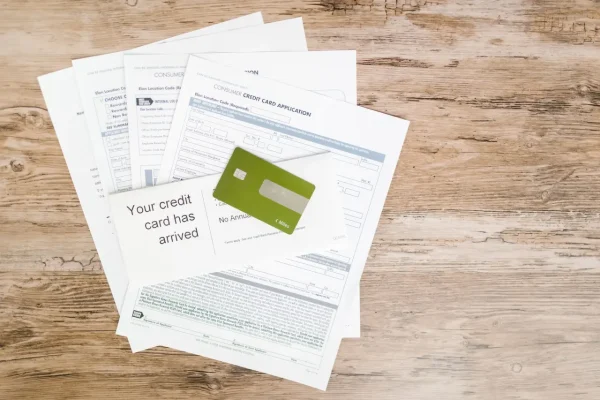
Completing the DS-260 is a step every US immigrant visa applicant must handle personally after the case is transferred to the National Visa Center (NVC). This is the online immigrant visa application, collecting all your personal information, residence history and work history. This guide walks through each information group in the form and points out common mistakes that delay a case.
The DS-260 applies to those processing their case through the consular path — that is, most EB-3 clients from Vietnam. The form is completed on the Consular Electronic Application Center system of the US Department of State. Each accompanying family member must have their own separate DS-260.
What to prepare before filling out the DS-260
Before starting, you should gather all the necessary documents so you can complete the form in one continuous session, avoiding leaving it half-done. The system does save your progress temporarily, but preparing in advance helps keep your information consistent and accurate.
- NVC case number and case number (Invoice ID) issued by the NVC.
- Passport of all applicants.
- Birth and marriage certificates and related civil status documents.
- Residence address history from age 16 to the present.
- Work history for the past 10 years.
- Sponsoring employer information in the US (company name, address).
Keep these documents nearby while filling out the form. The information in the application must match the original documents, as the consular officer will cross-check them during the interview.
Guide to completing the DS-260 by information group
The DS-260 is divided into several groups of questions. Below are the main groups and notes for completing each part.
Personal and passport information
The first part asks for full name, date of birth, place of birth, gender and marital status. Enter your name exactly as it appears on your passport, including the order of surname and given name. If you have ever used a different name (a different birth name, a name after a change), you must fully declare it under the other names used section.
Passport information includes the number, issue date and expiration date. If your passport is about to expire, you should renew it beforehand to avoid having to update it midway.
Address and contact information
This section asks for your current permanent address, mailing address and contact information. You also need to state the address where you will live in the US. If you do not yet have a fixed address, you can use a workplace address or the address of an acquaintance where you plan to stay temporarily.
Family history
This part covers information about your father, mother, spouse and children. For married applicants, you need to state the date and place of marriage registration matching the submitted marriage certificate. Those in a legally recognized common-law relationship should also declare it according to their actual status.
Residence and work history
This is the longest and most error-prone section. You must list every place you have ever lived from age 16 onward, and your work history for the past 10 years, including any periods of unemployment. Clearly record the start and end dates of each period, avoiding any gaps.
For an EB-3 case, the work history section should show consistency with the position sponsored by the employer. You do not need to exaggerate your experience — especially for the Other Workers subgroup, which does not require prior experience.
Security and medical information
The final group of questions relates to legal, security and medical history. Answer with complete honesty. Providing false information here is one of the most serious grounds for refusal, and consular authorities often already have data to cross-check against.
Distinguishing between DS-260 and DS-160
Many people new to this often confuse DS-260 with DS-160. These are two entirely different forms and cannot be used interchangeably.
DS-160 is the application for a nonimmigrant visa — used for tourism, business trips, short-term study. DS-260, on the other hand, is the application for an immigrant visa, for those who will move to the US to live long-term, such as under the EB-3 category. If you are applying under skilled employment immigration, you only complete the DS-260, not the DS-160.
This distinction matters because the two forms sit on separate systems and processes. Filling out the wrong form will cause the case to not match the visa type being applied for and will have to be redone from scratch.
Completing the DS-260 for a spouse and accompanying children
Every accompanying family member in an EB-3 case must have their own separate DS-260, including young children. The dependent’s information must be consistent with the principal applicant’s in related sections, such as shared place of residence or family relationship.
For children, note that the age and date of birth must match the birth certificate. In cases where a child is nearing 21 years old, the Child Status Protection Act (CSPA) affects whether the child can still be included as a dependent — this is an issue you should discuss carefully with a settlement consultant before submitting.
When completing the form for an accompanying dependent, use the same NVC case number as the principal applicant. Each application generates its own confirmation page after submission, and you need to print a confirmation page for each person to bring to the interview.
Common mistakes when completing the DS-260
Many cases are delayed not because of ineligibility but because of errors in filling out the form. You should carefully review the following points before clicking submit.
- Wrong order of surname and given name compared to the passport.
- Leaving gaps in the residence or work history.
- Missing other names used previously.
- Family information not matching the birth certificate or marriage certificate.
- Submitting before being certain — after submission, correcting information becomes much more difficult.
After submission, the system generates a DS-260 confirmation page. Print this confirmation page and bring it to the interview.
Tips for filling out the DS-260 accurately and faster
A few small habits help you complete the form smoothly and reduce the risk of errors that need to be corrected later.
- Draft the information on paper or in a file beforehand following the question groups in order, then re-enter — this helps you avoid misremembering dates.
- Save your Application ID as soon as the system issues it, so you can log back in if you leave the form unfinished.
- Fill it out in English using the international format for dates and proper names.
- Cross-check every item against your original documents before moving on to the next section.
- Read through the whole form once more before submitting, since edits are very limited after submission.
If you are filing for the whole family, you should complete the principal applicant’s form first, then use that information as the reference when filling out the forms for accompanying family members. This sequential approach keeps all the forms consistent with each other.
Do not rush to submit while still unsure about any item. An accurate DS-260 from the start will save you a great deal of time in the later steps.
What to do after submitting the DS-260
Submitting the DS-260 is not the final step. You still need to send civil documents to the NVC, wait for your case to be confirmed complete, and only then will an interview be scheduled. While you wait, start preparing early for the medical exam and organizing your original documents.
Once the NVC has received all the documents, your case moves to “Documentarily Qualified” status — meaning it is ready to be scheduled. The wait time until your interview depends on the consulate’s available slots and your priority date status. You should check your inbox regularly so you do not miss the appointment notice.
While you wait, do not let the information in your DS-260 become outdated. If there is a major change — such as a change of address, a new child, or a new passport — you will need to prepare updated documents to present at the interview.
The full list of documents to bring and notes on the interview date are covered in the article EB-3 visa interview. To see where the DS-260 fits into the overall journey, you can revisit the overview article on the step-by-step EB-3 case.
Summary
Filling out the DS-260 requires care more than complex knowledge. The most important principle is to declare information honestly, consistently with your original documents, and without leaving any date blank. A clean DS-260 helps the NVC process it quickly and makes the interview go smoothly.
If you would like your DS-260 reviewed before submission, the immigration consulting team at My Second World can help check it to reduce the risk of costly mistakes.