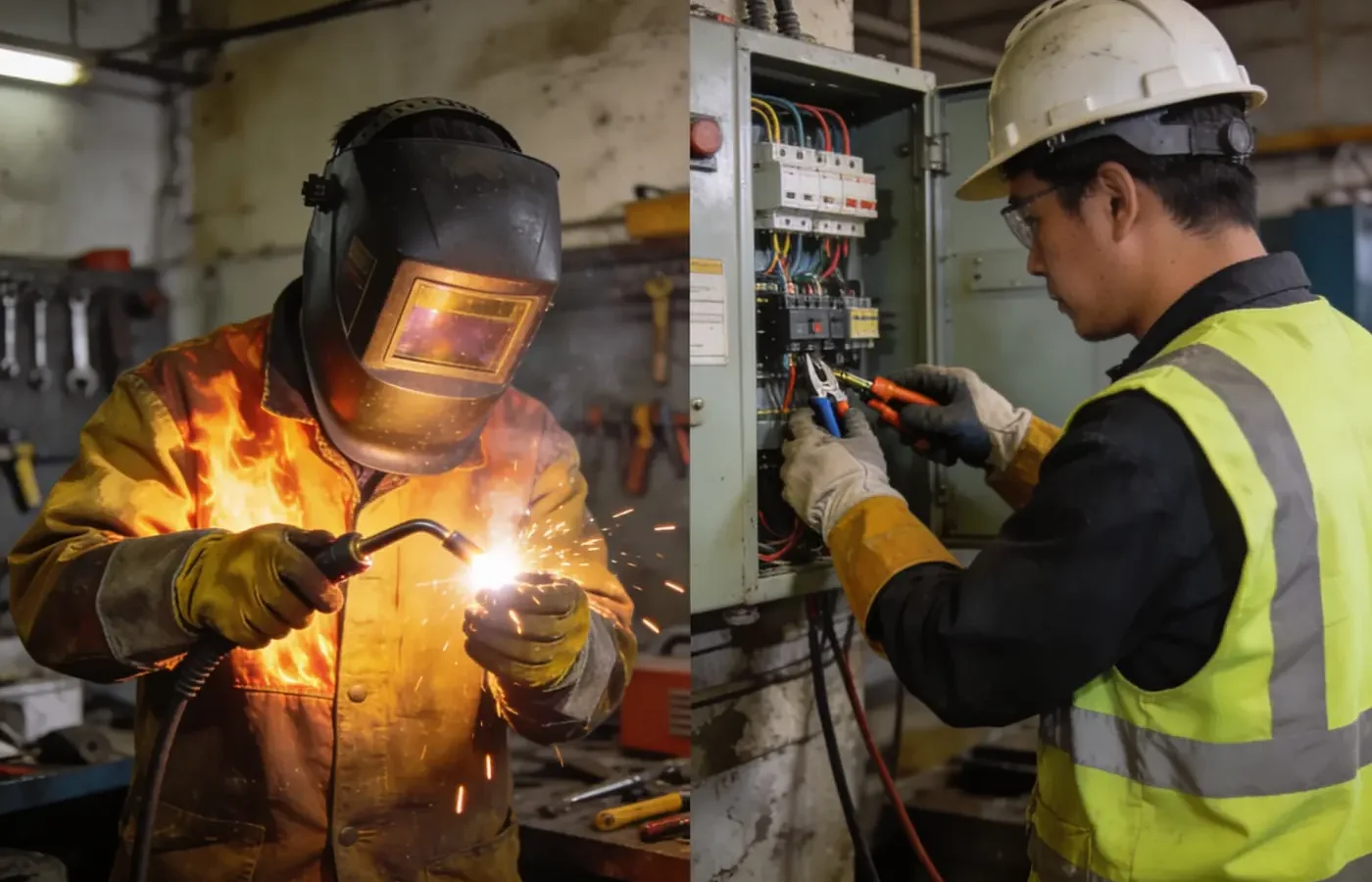
Migrating without a university degree is entirely possible, even though many people still believe you need advanced qualifications to move abroad. This article provides a neutral comparison of how the US, Canada, Australia, and Germany open their doors to hands-on skilled workers, along with specific conditions and pathways.
The notion that “without a university degree you cannot migrate” is a common misconception. In fact, migrating without a university degree is becoming a main pathway for many skilled Vietnamese workers. In reality, many developed countries face a severe shortage of skilled tradespeople and technical workers, while there is no shortage of people with bachelor’s degrees. As a result, modern immigration systems assess candidates on multiple factors, in which experience, trade skill, and the ability to contribute to the labor market are valued equally to, if not more than, an academic degree.
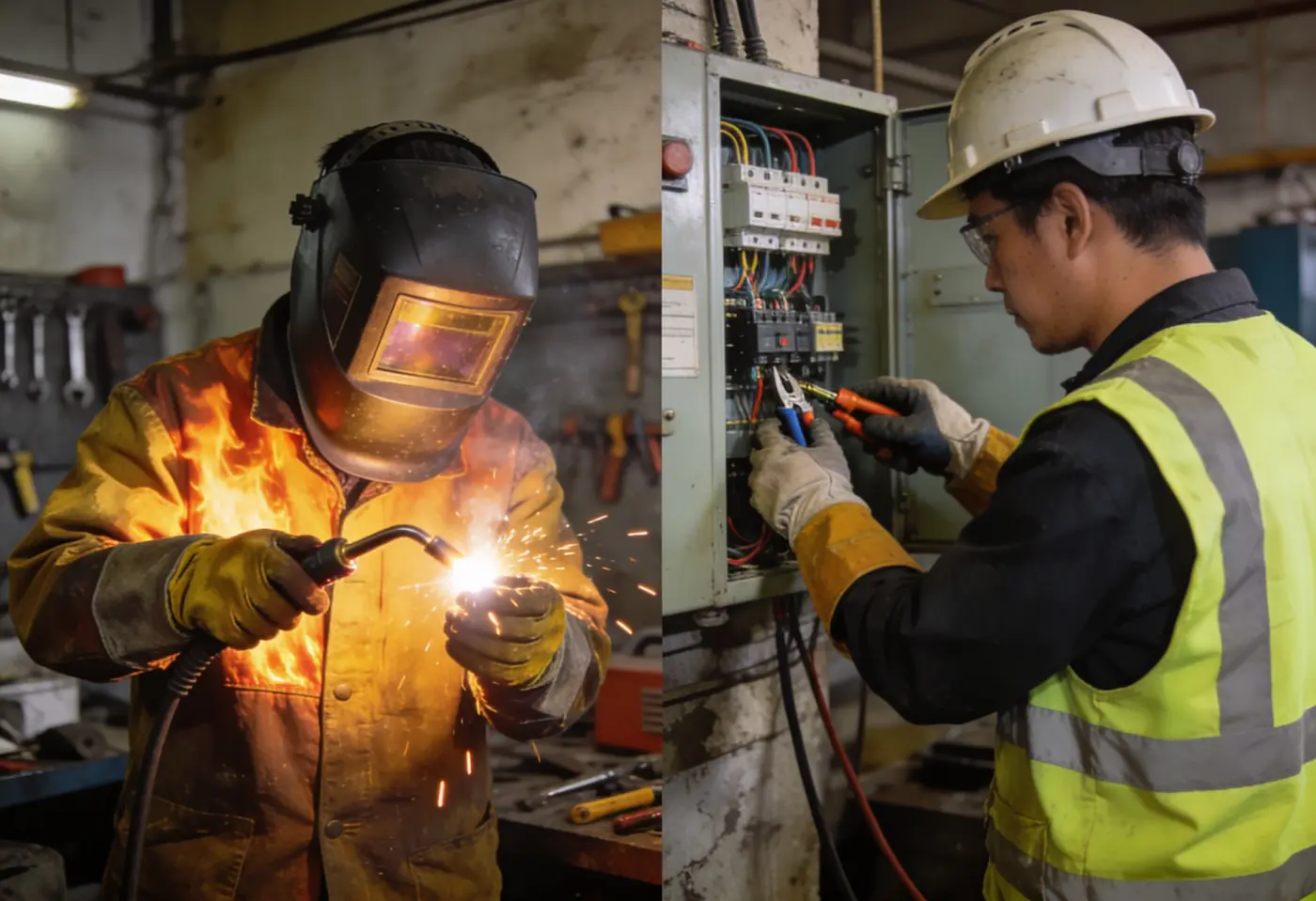
migrating without a university degree — illustrative image.
Contents
Why a university degree is not a mandatory requirement
Skilled migration countries typically use a points system or classify occupations by skill tier. Qualifications are just one of many factors. A welder, electrician, chef, or nurse with a vocational certificate and extensive experience can fully meet the requirements without a university degree.
The key point is the distinction between a “university degree” and a “recognized qualification.” Vocational certificates, intermediate/vocational college diplomas, and especially practical work experience are all qualifications of value in the eyes of immigration authorities. You do not need to be a bachelor’s degree holder, but you do need to prove that you have genuine skill and proper training.
This is why many people working in hands-on trades have stronger migration applications than those with a university degree working outside their field. The more an occupation appears on the shortage list, the higher the chances.
Migrating without a university degree: how the four countries open their doors
Germany and the dual vocational training model
Germany is a prime example of a country that values hands-on trades. The dual vocational training system (Ausbildung) combines theoretical study with practical work at a company, producing a skilled workforce that is respected by society and well paid. Foreigners can take part in this pathway, and many industries are in great need of workers. German language proficiency is a key requirement. The portal Make it in Germany of the German Government compiles guidance for trade workers. Recognition of vocational qualifications from Vietnam can be checked through the database anabin.
Canada and its multi-pathway system
Canada classifies occupations into several skill tiers, with skilled trades having their own pathway. Many provinces actively nominate workers in occupations the local area is short of, without necessarily requiring a university degree. The overall points system also recognizes experience and vocational qualifications. The overall framework is administered by IRCC (Immigration, Refugees and Citizenship Canada) .
Australia and the occupation shortage list
Australia has many skilled visa streams that include trade occupations. Certain technical and service occupations are on the priority list, especially in regional areas. Skills assessment and English proficiency are important requirements, but a university degree is not mandatory for many trade occupations. Information is provided by the Australian Department of Home Affairs .
The US and its distinctive pathway
The US has some streams for workers that do not require a university degree, but many pathways depend on employer sponsorship and can take time. Compared with the other three countries, the path for hands-on trades in the US is usually less straightforward. Official information is provided by USCIS (U.S. Citizenship and Immigration Services) .
Comparison table for people without a university degree
| Tiêu chí | Germany | Canada | Úc | United States |
|---|---|---|---|---|
| Strengths for hands-on trades | Highly developed dual vocational training | Multiple pathways, many provincial nominations | Trade occupation shortage list | Streams available but employer-dependent |
| Vocational qualification recognition | Checked through anabin, ZAB | Equivalence assessment depending on the occupation | Skills assessment by the relevant trade authority | Depends on the stream, usually through the employer |
| Language | German language is key | English or French | English | English |
| Path to permanent residence | Clear once the occupation is recognized | Khá rõ ràng | Clear for listed occupations | Usually longer |
Overall, all four countries offer opportunities for people without a university degree, but in very different ways. Germany excels at vocational training, Canada excels at multiple pathways, Australia is clear based on its occupation list, and the US has an opening but depends on many factors. No country is absolutely superior.
Hands-on trades with good opportunities
Certain occupation groups regularly appear on shortage lists in many countries, opening up good opportunities for people without a university degree:
- Healthcare occupations: nurses, care assistants, elderly care. You can read more in the article Migrating as a nurse.
- Culinary trades: chefs, bakers. The article immigration for chefs analyzes this direction in detail.
- Technical and construction trades: welders, electricians, mechanics, plumbers.
- Service and manufacturing occupations: depending on the location and labor market demand.
If your current occupation is considered unskilled labor, the article immigration for general laborers will help you understand how to elevate your trade to a tier with better opportunities.
Preparing your application without a university degree
Lacking a university degree is not a problem, as long as you compensate with other factors. A strong application usually includes:
- Clear vocational certificates: intermediate diplomas, vocational college diplomas, legally valid training certificates.
- Documented experience: employment contracts, payslips, employer confirmations, detailed job descriptions.
- Language certificates: English or German depending on the country. This is usually the decisive factor.
- Qualification assessment/recognition: through the relevant specialized authorities of the destination country.
Because this is a significant financial and legal matter (YMYL), you should verify all conditions against government sources and be wary of promises of guaranteed migration with no conditions at all. For an overall framework for choosing between countries, you can refer to the article choosing a country for skilled migration.
Language taking the place of a degree
One point that surprises many people: for those without a university degree, investing in language usually delivers greater benefits than trying to obtain an additional degree. Strong language proficiency both helps meet visa requirements and helps with finding work and integrating after arrival. For those specifically wary of English, the article immigration without needing English analyzes suitable options, particularly through German.
Recognition of vocational qualifications from Vietnam
A major question for people without a university degree is: are vocational certificates or experience gained in Vietnam recognized abroad? The answer is yes, but only through a recognition process or equivalence assessment, and this process differs from country to country.
In Germany, recognition of vocational qualifications is especially important because many occupations are tightly regulated. Qualifications from Vietnam are compared against the corresponding German occupational standard; if there are gaps, the worker may need additional training. This is why on-the-spot vocational training models are so popular, as they produce a qualification recognized directly in Germany.
In Canada and Australia, certain regulated occupations require local assessment or licensing, while many other occupations only need a general skills assessment. You need to determine whether your occupation falls into the regulated category, as this determines how complex the process will be.
The general advice is to research the occupational recognition requirements before applying, and to prepare your trade documents early. Missing what seems like a minor document can sometimes delay the entire process by months.
Supplementary training in the destination country
In many cases, the fastest path is not to try to prove your existing qualification is equivalent, but to take a short course or supplementary program in the destination country to obtain a qualification recognized right there. This approach is especially suited to young people who are willing to combine study and work and want a solid foundation for long-term migration.
A typical pathway for people without a university degree
For a clearer picture, below is a reference pathway that many people without a university degree have followed. This is a general, illustrative framework rather than a fixed formula, since each country and each occupation has its own particulars.
- Step 1 – Identify your occupation and skill tier: Check which tier your occupation falls into and whether it is on the destination country’s shortage list.
- Step 2 – Invest in language: Study for and pass an English or German certificate at the required level. This is usually the biggest barrier.
- Step 3 – Complete your vocational qualification: Obtain a vocational certificate, take supplementary training, or prepare for a skills assessment.
- Step 4 – Gather your experience documents: Contracts, payslips, employer confirmations, job descriptions.
- Step 5 – Choose the right stream and location: Target the province, state, or region that needs your occupation.
- Step 6 – Submit your application and follow up: Provide additional information promptly if requested, and stay in contact with official sources.
This pathway shows that lacking a university degree is not a dead end, but simply a reason to invest more heavily in language, vocational qualifications, and experience documentation. These factors are entirely within your ability to prepare.
Patience and a multi-year plan
It is important to be realistic that migrating this way is usually a multi-year plan, especially for those who need to learn a new language and complete additional training. However, that very investment builds a durable foundation: someone with a recognized trade and strong language skills not only finds it easier to migrate but also settles into a stable life faster after arrival. This is an investment for the whole family, especially if you plan to bring relatives along, as analyzed in the article Bringing family along when migrating.
Summary
Migrating without a university degree is a practical path for many Vietnamese people working in hands-on trades. The US, Canada, Australia, and Germany all offer opportunities, but each in its own way: Germany excels at dual vocational training, Canada at multiple pathways, Australia at its occupation shortage list, and the US has an opening but depends on many factors. No country is absolutely better; the right choice depends on your trade, experience, language, budget, and your family’s long-term goals.
References
- Make it in Germany – German Government Portal
- IRCC – Immigration, Refugees and Citizenship Canada (canada.ca)
- Australian Department of Home Affairs (immi.homeaffairs.gov.au)
This article is compiled from government sources. Immigration regulations and figures may change over time; you should check current information on the official website before making a decision.
Without a university degree, which country is easiest to migrate to?
No country is absolutely easy. Germany stands out for dual vocational training, Canada for its multiple provincial pathways, and Australia for its trade occupation shortage list. The best choice depends on your trade and your language.
Are vocational certificates recognized abroad?
Yes, but they must go through the destination country’s recognition process or equivalence assessment. For example, Germany checks them through anabin and ZAB, while Australia assesses them through the relevant trade authority. You should prepare complete trade documents with notarized translations.
Which occupations offer the best opportunities without a university degree?
Occupation groups that are frequently in shortage include healthcare (nurses, care assistants), culinary (chefs), and technical and construction trades (welders, electricians). The more an occupation appears on the shortage list, the higher the chances.
Can work experience replace a university degree?
In many immigration systems, practical experience is highly valued and can offset the lack of a university degree, as long as it can be proven with contracts, payslips, and employer confirmations.
Should I prioritize getting another degree or learning a language?
For people without a university degree, investing in language is usually more effective. Strong language proficiency both helps meet visa requirements and helps with finding work and integrating after arrival.