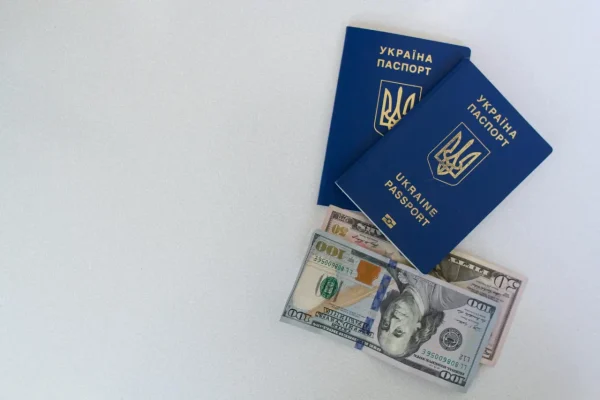
When planning to settle abroad, many people focus only on themselves and forget that bringing family members through Express Entry is an important part that needs preparing from the very start. You can fully include your spouse and children in a single application, as long as you declare accurately and prepare complete documents proving the relationship. This guide was compiled by the My Second World team to help you understand each step clearly, from filing the application to the day the whole family lands in Canada together.
Why you should bring your family along through Express Entry from the start
Express Entry is the application management system for Canada’s three federal skilled-worker immigration programs. Its biggest advantage is that you are allowed to include family members in the same permanent residence (PR) application.
Declaring family members right from when you create your profile allows the whole family to be granted PR at the same time. As a result, your spouse and children do not have to wait for separate sponsorship later, which would take considerably more time and procedure.
In addition, if your spouse accompanies you, your spouse’s factors can contribute additional points to your total CRS score. Therefore, declaring accurately from the start both optimizes your score and avoids legal trouble later.
Who counts as a “family member”
Before proceeding, you need to clearly understand who is eligible to accompany you. Under the Canadian immigration authority’s definition, family members allowed to be included fall into three main groups.
- Legal spouse or a common-law partner who has lived together continuously for at least 1 year.
- Dependent child: generally a child under 22 who is unmarried and not in a common-law relationship.
- A dependent child aged 22 or older but financially dependent on the parents due to a physical or mental condition.
Note that parents and siblings cannot be included in an Express Entry application. These individuals must apply separately under family sponsorship after you have become a permanent resident. You can look up the full definition on the website of Immigration, Refugees and Citizenship Canada.
Declaring family members when bringing your family through Express Entry
This is the foundational step that determines whether your family members can accompany you. When creating an Express Entry profile, the system will ask about your marital status and number of dependents.
You need to carry out the following steps in order:
- Accurately declare your current marital status (single, married, common-law, divorced, etc.).
- Fully list all children, including those not accompanying you and those who are already adults. Omitting any can be treated as a misrepresentation.
- For each person, clearly state whether they are “accompanying” or “non-accompanying” in the application.
- Provide each person’s personal information: full name, date of birth, nationality, and passport number.
One unchangeable rule: you must declare all family members, even those not accompanying you. If you later want to sponsor a child or spouse who was not declared, the application may be refused on grounds of “not examined.”
Documents proving family relationships
This is the part most prone to gaps, since documents in Vietnam sometimes do not match exactly. My Second World’s team of immigration consultants recommends preparing the following documents early.
For spouses:
- Marriage certificate (notarized translation into English or French).
- Valid passports of both spouses.
- Wedding photos, pictures of shared life, and communication history to support proof of a genuine relationship when needed.
For children:
- Birth certificate showing the full names of both parents.
- The child’s passport, or identity documents if they do not yet have a passport.
- Custody documents (if the parents are divorced) and a written consent for the child to leave the country from the other parent.
All Vietnamese-language documents must be translated by a certified translation provider, along with the originals when submitted. Consistency between the name on the passport and the name on the birth certificate is a factor frequently flagged as an error.
The impact of a spouse on your CRS score
Many people wonder whether they should bring their spouse along, since it affects how the CRS score is calculated. The answer depends on each person’s specific profile.
When you bring your spouse along, the system scores you under the “with accompanying spouse” category. In this case, some of the principal applicant’s individual point items are slightly reduced, but in exchange the spouse contributes points in categories such as education, language proficiency, and Canadian work experience.
The table below summarizes the basic differences:
| Factor | Principal applicant alone | With accompanying spouse |
|---|---|---|
| Maximum points for the “human capital factors” category | Higher for the applicant | Shared between both people |
| Points from spouse’s language | Không có | Can add extra points |
| Points from spouse’s education | Không có | Can add extra points |
Therefore, before deciding, you should calculate both scenarios. If your spouse has a strong IELTS score and a high level of education, bringing them along is usually more beneficial for your total score.
The application process after receiving the invitation (ITA)
After your profile is selected and you receive an Invitation to Apply (ITA), the stage of preparing documents for the whole family begins. This is when the documents proving your relationships must be complete.
Steps to complete in order:
- Complete a medical exam for all accompanying family members at a designated facility, including young children.
- Obtain a police certificate for everyone aged 18 or older, from every country where they have lived for more than 6 months.
- Upload all personal documents and relationship-proof documents into the online application.
- Pay the fees according to the current fee schedule, including the application processing fee and the right of permanent residence fee for adults.
You need to submit everything in full within the prescribed deadline from the date of receiving the ITA, usually 60 days. Missing the deadline means having to create a new profile and wait for the next draw. Specific fee amounts are always published and updated on the official information portal, so you should check against the current fee schedule.
Common mistakes and how to avoid them
While supporting clients, the My Second World team has observed that many applications are delayed or returned due to very common mistakes. You can fully avoid these by paying attention from the start.
- Forgetting to declare an adult child: even if the child is not accompanying you, they must still be fully listed in the application.
- Names not matching across documents: a confirmation or correction document must be attached if there are discrepancies in diacritics or middle names.
- A child turning 22 partway through the process: the child’s age is “locked” at a specific point in the process, so you should submit early to avoid the child exceeding the dependent age threshold.
- Forgetting to update family changes: if you have another child or get married while your application is being processed, you must notify the immigration authority immediately.
Therefore, reviewing all family information before submission is absolutely essential. A small error in a date or a name can extend processing time by many months.
Summary
Bringing family through Express Entry is not overly complicated if you clearly understand who is eligible to accompany you, declare honestly from the start, and fully prepare the relationship-proof documents. Pay special attention to: listing all family members including those not accompanying you, ensuring names match across documents, and submitting within the deadline after receiving the ITA.
Next steps: you should calculate your CRS score for both the alone and with-spouse scenarios, while also listing the documents that need notarized translation to stay ahead of schedule. If you need a thorough assessment of your family’s application and a clear roadmap, please contact My Second World’s team of immigration consultants for detailed, case-by-case support.