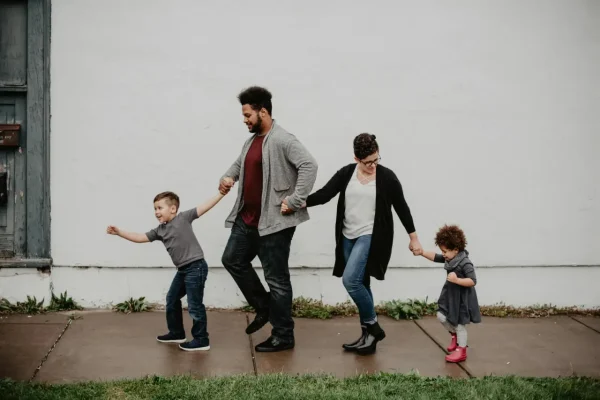
EB-3 for family is one of the biggest advantages of this category, since it allows the whole family to immigrate together, not just the worker alone. This is a factor that leads many Vietnamese families to choose this path. This article clarifies who can accompany the worker and what rights they have upon arriving in the United States.
Clearly understanding the scope of family benefits helps you plan for the whole family, rather than only accounting for the principal applicant.
Who is included under EB-3 for family
Theo U.S. Citizenship and Immigration Services (USCIS), this category allows the principal worker to bring their spouse and unmarried children under 21. They are referred to as derivative beneficiaries.
This means that when the principal worker’s application succeeds, the eligible spouse and children also receive green cards. The whole family becomes permanent residents together, without needing complicated separate applications. This is a major advantage for families.
Requirements for accompanying family members
Accompanying family members must meet specific requirements. A spouse must have a legally valid marriage, recognized in the place where it was performed. Children must be unmarried and under 21 at the time the green card is granted.
Theo U.S. Department of State, these conditions are determined when the application reaches its final step. This is why timing matters for families with children approaching 21, since a child may age out while waiting. This issue will be discussed in detail in a separate article.
Family benefits upon arrival
When the whole family receives green cards, each member is a permanent resident with the full rights of that status. Spouses may live and work legally. Children may attend school, including public school, under local conditions.
This is a major difference from temporary work visas, where accompanying family members are often restricted from working or studying. Under EB-3, the whole family enjoys full permanent resident status, opening up a stable, long-term future for every member.
Why this is a major advantage
The ability to bring the whole family to immigrate together is one of the reasons this category appeals to Vietnamese people. Instead of one person going ahead and trying to sponsor the rest later, the whole family can start a new life at the same time.
This helps keep families from being separated for a long time and reduces the complexity of multiple separate applications. However, to take advantage of this, you need to plan early, paying particular attention to your children’s ages. Proper preparation helps the whole family reach the finish line together.
Summary
EB-3 for family allows you to bring your spouse and unmarried children under 21, all receiving green cards together. The whole family enjoys full permanent resident status, able to live, work, and study. You should plan early for the whole family, paying particular attention to your children’s ages so as not to miss the opportunity.
— —
References
- U.S. Citizenship and Immigration Services (USCIS) – https://www.uscis.gov/working-in-the-united-states/permanent-workers/employment-based-immigration-third-preference-eb-3
- U.S. Department of State – https://travel.state.gov/content/travel/en/us-visas/immigrate/the-immigrant-visa-process.html
Read more: Overview of the EB-3 visa for US immigration · EB-3 stepchildren and adopted children: Conditions attached to the immigration application