An EB-3 case file is the complete set of applications and documents that a US employer and the worker must prepare to apply for a Green Card under the skilled employment immigration category. This is a multi-stage, lengthy process that requires accuracy at every step. This guide walks through the EB-3 application sequence from A to Z, helping you know where you stand in the process and what to do for the next step.
EB-3 is the third preference category among employment-based immigrant visas, sponsored by a US employer. According to U.S. Citizenship and Immigration Services (USCIS), this category includes three subgroups: Other Workers, Skilled Workers, and Professionals with a bachelor’s degree or higher. Most Vietnamese applicants go through the Other Workers subgroup.
What stages make up an EB-3 case
A complete EB-3 case goes through three major stages, each handled by a different agency. Understanding these three stages helps you avoid confusion when hearing the technical terms.
- Stage 1 — PERM Labor Certification: The US Department of Labor (DOL) confirms that no qualified US worker is available for the position the employer wishes to sponsor.
- Stage 2 — Form I-140: The employer files a petition with USCIS to prove the position and its ability to pay the offered wage.
- Stage 3 — Applying for the Green Card: The worker completes the immigrant visa procedure through the consulate (DS-260) or adjusts status if already in the US (I-485).
Each stage is tied to a “Priority Date.” This date is counted from when PERM is filed and determines when the case’s turn comes up for visa issuance according to the monthly Visa Bulletin.
Step 1: PERM Labor Certification
PERM is the starting step and also lays the foundation for the entire EB-3 case. The employer must advertise the position as required, proving they made efforts to find a US worker but found no suitable candidate.
The PERM process is carried out by the employer and their legal department; the worker generally submits nothing directly at this stage. However, you should be aware of the job position, proposed wage and occupation code, as this data will carry through the entire case. According to the U.S. Department of Labor (DOL), the PERM application is filed through the online FLAG system.
When PERM is approved, the filing date becomes your official priority date . Record this date carefully — it is the most important milestone for tracking progress going forward.
Step 2: Form I-140 — employer sponsorship
After PERM is approved, the employer files Form I-140 (immigrant petition) with USCIS. This petition confirms that the position is genuine, the worker meets the requirements, and the employer has the financial ability to pay the committed wage.
The I-140 filing is usually accompanied by documents proving the company’s financial ability, a copy of the approved PERM, and the job description. On the worker’s side, you may need to provide degrees, certificates or proof of experience depending on the EB-3 subgroup applied for. The Other Workers subgroup typically does not require prior experience or an advanced degree.
I-140 processing time varies depending on the period. The employer can choose Premium Processing to shorten the review time, but this does not get the case a visa sooner if the priority date is not yet current.
Step 3: Choosing the EB-3 processing path
At the Green Card application stage, the EB-3 case splits into two paths depending on where you currently are.
Consular Processing: Applies to people currently in Vietnam. After I-140 is approved and the priority date becomes current, the case is transferred to the National Visa Center (NVC). You complete Form DS-260, pay the fees, submit civil documents and wait for an interview appointment at the US Consulate in Ho Chi Minh City. This is the most common path for Vietnamese applicants.
Adjustment of Status: Applies to people already legally present in the US. The worker files Form I-485 (adjustment of status) to become a permanent resident without having to leave the US.
Most EB-3 clients from Vietnam go through consular processing. So the most important preparation step at this stage is completing the DS-260 filing guide accurately, since errors on the DS-260 can delay the interview schedule.
Step 4: Interview and entry
Once the NVC confirms the case is complete, you will be scheduled for an interview. Before the interview, the applicant must undergo a medical exam at a designated facility and have all original documents ready. The full document checklist and notes are presented in detail in the article EB-3 visa interview.
If the interview is successful, the immigrant visa is stamped into the passport and you receive a sealed envelope to submit upon entry. Holders of an immigrant visa must enter the US within the validity period stated on the visa, then pay the USCIS Immigrant Fee to have the Green Card produced.
The physical Green Card is usually mailed to a US address within a few weeks to a few months after entry. From this point, you are officially a lawful permanent resident and have the right to live and work in the United States long-term.
The worker’s role at each stage
One point that confuses many people is not knowing what they must do themselves versus what the employer handles. Understanding these roles helps you stay proactive and not feel anxious when the early stages seem to have “nothing to do.”
During the PERM and I-140 stages, almost all procedures are carried out by the employer and their legal department. The worker mainly provides personal information, credentials or proof of experience when requested, and waits.
Your role becomes active from stage three onward. This is when you personally complete the DS-260, undergo the medical exam, prepare original documents and attend the interview. So although the early stages may seem passive, you should still use this time to gather your personal documents for the later stage.
Personal documents to prepare early
Although each stage is handled by a different agency, there are certain documents you should prepare early to avoid being caught off guard when reaching the consular stage.
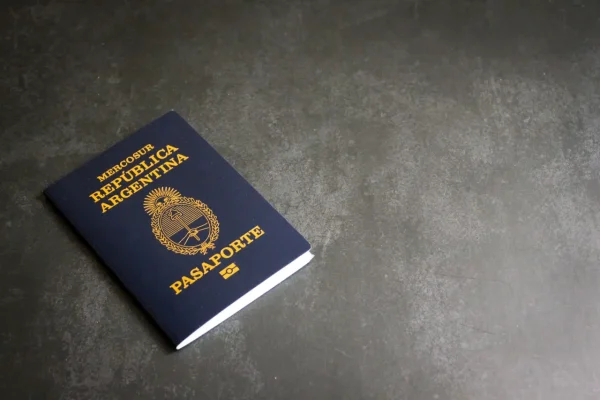
- Passport valid for at least 6 months from the expected date of entry.
- Birth certificate original, with an extract if needed.
- Marriage certificate (if traveling with a spouse) and the birth certificates of any accompanying children.
- Judicial record (judicial record card No. 2) for individuals 16 years of age or older.
- Passport photos meeting US immigrant visa specifications.
Keep both the originals and notarized translations of the documents above. Preparing in advance significantly shortens the time once the case moves to the NVC and an interview is scheduled.
EB-3 processing time and quota
A question you often ask is how long an EB-3 case takes. There is no fixed number, as the timeline depends on the processing speed of PERM at the Department of Labor, the review time for I-140 at USCIS, and especially the status of the priority date on the Visa Bulletin.
Each year, the EB-3 category is only allotted a limited number of visas under US immigration law. Within it, the Other Workers subgroup is further capped at around 10,000 visas per year worldwide. When demand exceeds the quota, the priority date moves backward — called retrogression — and the case must wait its turn.
So after I-140 is approved, the case is not necessarily processed right away. You need to check the monthly Visa Bulletin to see whether your priority date has become current. When the priority date is “current,” the NVC will then invite you to complete the DS-260 and schedule an interview.
Because of this, EB-3 case progress is usually measured in years rather than months. Preparing personal documents early and staying in regular contact with the employer helps you not miss any milestone throughout the waiting process.
Summary
An EB-3 case goes through three clear stages: PERM at the Department of Labor, I-140 at USCIS, and applying for the Green Card via DS-260 or I-485. Each step depends on the outcome of the previous one, so accuracy and patience are the deciding factors.
To prepare well for the stage most important to Vietnamese applicants, you should continue reading the guide on completing the DS-260 và checklist EB-3 visa interview. If you need My Second World’s team of settlement consultants to review your case roadmap for your specific situation, you can book a consultation for direct support.