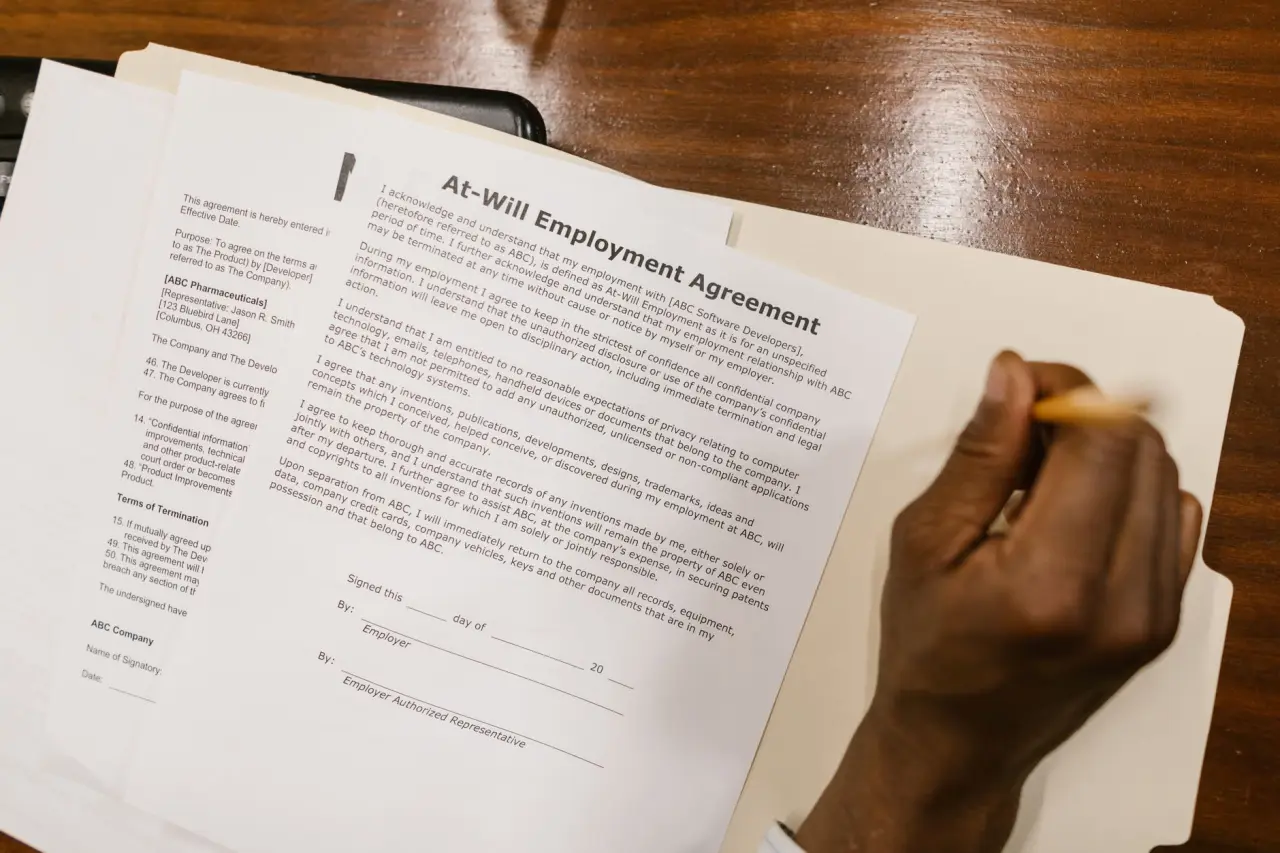
A German employment contract is the most important legal document determining your rights, salary and stability when working in Germany. It is also a mandatory document for applying for a work visa and a residence permit (Aufenthaltstitel). A contract drafted clearly and lawfully will protect you throughout your stay and work in Germany. Conversely, signing hastily without understanding the terms can lead to setbacks that are hard to fix later. In this guide, the My Second World team will walk you through each item to check before you put pen to paper.
What a German employment contract is and why it matters
In Germany, an employment relationship is established through a contract (Arbeitsvertrag) between the employee and the employer. The contract can be in writing or even verbal, but in practice a written version is always needed as evidence. In addition, under the Act on Proof of Terms and Conditions of Employment (Nachweisgesetz), the employer is required to provide a document setting out the essential terms.
For Vietnamese nationals, this document also plays a dual role. Beyond establishing the job, it is a core document in the application for a work visa and residence permit.
As a result, the German representative office and immigration authority will scrutinize the contract carefully to verify the legitimacy of the position, salary and working conditions. A contract missing information can cause the application to be returned or the processing time to be extended.
Mandatory clauses the contract must include
Before signing, you need to review the contract to make sure it fully states the essential items required by law. This is the group of information the employer is obligated to specify clearly.
- Full name and address of both parties
- Start date and place of work
- Job description and specific job title
- Salary, allowances and pay period
- Agreed weekly working hours
- Annual leave entitlement
- Notice period for termination
- Reference to a collective bargaining agreement (if applicable)
According to the official portal Make it in Germany of the German government, a transparent contract must clearly present the above terms so the employee correctly understands their rights and obligations.
If any item is left blank or is vague, you should ask for clarification before signing. Adding it after signing is usually much harder.
How to read a German employment contract step by step
To avoid missing details, you should read the contract in a systematic order rather than skimming. Below are the specific steps to check.
- Determine the type of contract: check whether the contract is open-ended (unbefristet) or fixed-term (befristet). An open-ended contract is more stable for long-term residence goals.
- Compare the job title and job description: the job title in the contract must match the occupation recognized for you and the position stated in your visa application.
- Check the salary: compare the salary stated in the contract with the market rate and the minimum threshold of the corresponding visa category.
- Review working hours and overtime: confirm the weekly hours, how overtime (Überstunden) is calculated and paid.
- Read the probation and termination clauses carefully: note the probation period and the notice period for both parties.
- Note reference clauses: many contracts refer to a collective agreement or company policy, so ask for the full document.
When you come across a difficult German term, do not hesitate to ask for a translation or explanation. Understanding it clearly before signing is always better than a dispute later.
Salary, working hours and annual leave
Salary is the item that draws the most attention, but it can also be easily misunderstood if you only look at the figure. You need to distinguish between gross salary (Bruttogehalt) and net salary (Nettogehalt) after tax and social insurance deductions.
Germany applies a statutory minimum hourly wage that is periodically adjusted. So the salary in the contract must not fall below this floor. For some skilled-worker visa categories, there is also a separate, higher salary threshold the contract must meet.
Regarding working time, the standard work week in Germany is usually around 35 to 40 hours. The law also caps the maximum daily working hours to protect workers’ health.
In addition, the statutory minimum paid annual leave is 20 days per year for a 5-day work week. Many companies grant more, typically 25 to 30 days. You should check that this figure is clearly stated in the contract.
Probation period and termination rules
Most employment contracts in Germany include a probation period (Probezeit), usually lasting up to 6 months. During this period, the notice period for resignation is shorter, typically around 2 weeks.
After probation ends, the statutory notice period becomes longer and increases with seniority. This applies to both sides to ensure fairness.
So, you need to clearly understand how much notice you must give if you want to change jobs, as well as how much notice the company must give if it wants to terminate employment. According to guidance from Bundesagentur für Arbeit, employees are strongly protected by law against arbitrary dismissal, especially after the probation period.
An important note for foreign nationals: losing your job can affect your residence permit. So understanding the termination clauses helps you respond proactively if there is any disruption.
The link between the employment contract and the residence permit
For workers from outside the European Union, the employment contract and the residence permit are closely tied together. The immigration authority usually issues the permit based on the specific job stated in the signed contract.
So, if you change jobs or employers, you may need to notify the authority or apply for an adjustment to your permit. In some cases, changing jobs during the initial period is restricted.
In addition, the salary and type of job in the contract determine which visa category you qualify for, such as the EU Blue Card for highly skilled workers or the regular skilled-worker category. Your qualifications also need to be recognized, usually through the Anabin system, to be checked against German standards.
So, the contract is not just an employment agreement but also the legal foundation for your entire settlement plan in Germany.
Common mistakes that put employees at a disadvantage
Through supporting clients with their applications, My Second World’s immigration consulting team has noticed several recurring mistakes you should avoid.
- Signing a contract only in German without fully understanding its content
- Not checking whether the salary meets the threshold for the visa category
- Overlooking the overtime clause and how it is paid
- Not paying attention to the notice period for resignation
- Confusing gross salary with net salary
- Not keeping a copy of the contract signed by both parties
In addition, in some cases the contract term is too short, creating risk for renewing residence. So you should carefully consider the contract term from the outset.
When any clause is unclear, ask for a written explanation. A clear answer from the employer will give you much more peace of mind.
Summary
A carefully reviewed German employment contract is the foundation for a safe and sustainable settlement journey. You should focus on the core points: type of contract, gross and net salary, working hours, annual leave, probation period and termination clauses. At the same time, always cross-check the contract’s content against the requirements of the visa category and residence permit you are pursuing.
As a next step, you should complete your degree recognition, prepare your visa application, and keep a fully signed copy of the contract. If you need help reviewing your contract and planning your settlement, you can consult My Second World’s immigration consulting team for detailed guidance tailored to your case.