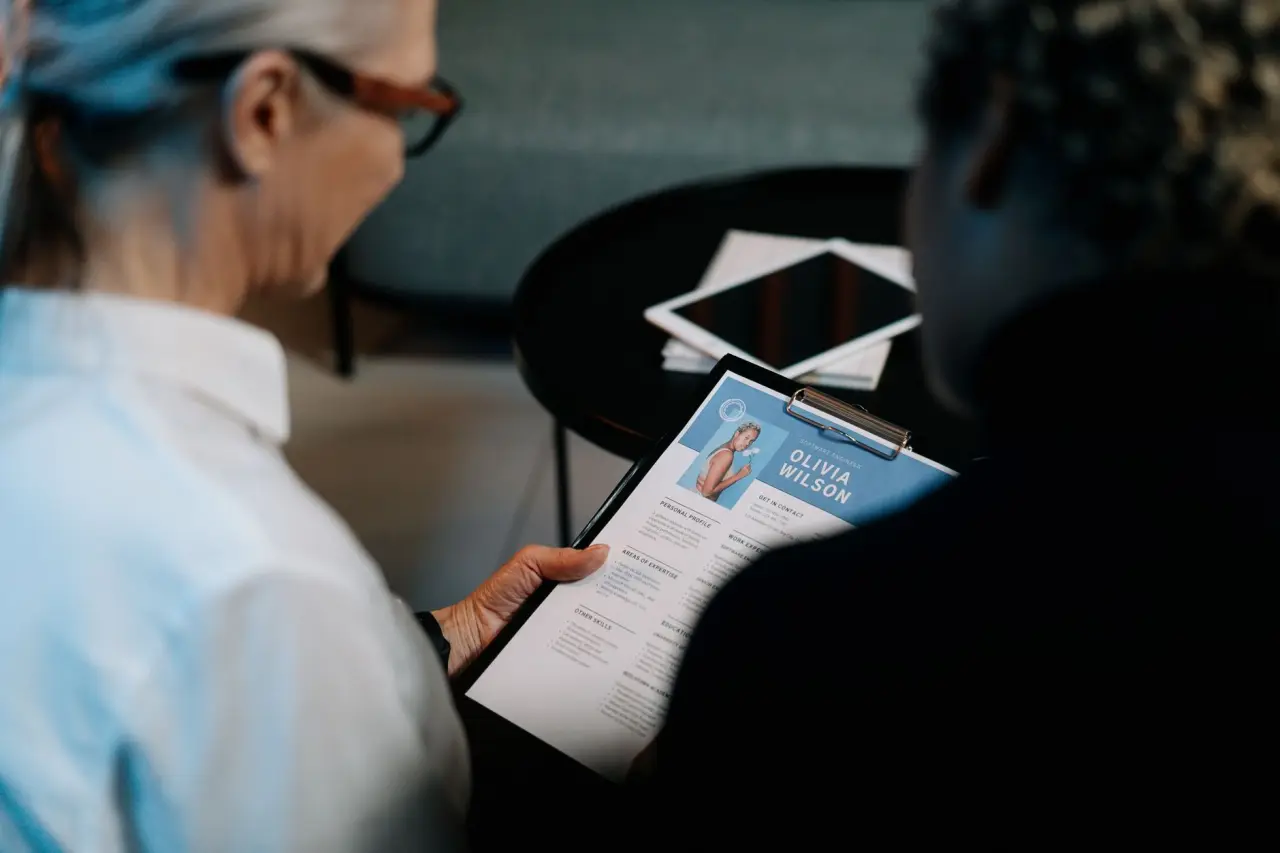
Writing a job application CV for Germany is the first step, and also the decisive one, when you want to apply to a German company under the skilled migration pathway. A complete German job application isn’t simply a Vietnamese CV translated into German or English — it must follow a distinct format called the Lebenslauf. In this guide, the My Second World team walks through each step to help you put together a professional Lebenslauf that meets the expectations of German employers.
What is a Lebenslauf in a German job application
Lebenslauf literally means “course of life,” equivalent to a CV or professional résumé in Vietnam. However, Germans follow fairly strict presentation conventions that prize clarity and conciseness.
A complete German job application (Bewerbung) usually consists of three parts. First is the cover letter (Anschreiben). Second is the Lebenslauf. Third are the attached diplomas, certificates and reference letters.
The Lebenslauf is the part employers scrutinize most closely. It shows a candidate’s educational path, work experience and capabilities in just one to two pages. Investing time in this section is therefore essential.
Standard structure of a Lebenslauf
Unlike colorful, creative CVs, the Lebenslauf favors a neat, clearly sectioned tabular layout (tabellarischer Lebenslauf). A standard version usually includes the following information blocks, in this order.
- The heading “Lebenslauf” and personal details (Persönliche Daten).
- A brief career objective (optional, not mandatory).
- Work experience (Berufserfahrung).
- Education and training (Ausbildung, Studium).
- Skills and competencies (Kenntnisse).
- Foreign languages (Sprachkenntnisse).
- Hobbies and extracurricular activities (optional).
- Place, date and signature.
The order of sections can vary somewhat. However, personal details always go at the top of the page, and the signature always goes at the end. You should keep this framework so employers can follow it easily.
Required information and details to avoid
The personal details section of the Lebenslauf needs to be complete but not excessive. This is a point many Vietnamese candidates get wrong, out of habit of writing overly detailed entries.
Information that should be included: full name, date of birth, place of birth, nationality, contact address, phone number and a professional email address. In addition, if you are in the process of applying for a work visa or the Chancenkarte, you may state your work permit status clearly.
According to guidance from Make it in Germany, the official portal of the German government, application documents must be honest, complete and professionally presented. Therefore, all the information you include must be verifiable.
Some information that used to be common is now outdated and should be avoided. Specifically, detailed marital status, religion and ID card number. In addition, you don’t need to list your parents’ names or occupations, as is customary on the Vietnamese personal-history form.
Conventions on photos, chronological order and length
A portrait photo (Bewerbungsfoto), while not legally required, is still very common in German hiring culture. If you use one, you should invest in a professionally taken photo, with formal attire and a neutral background.
An important convention is presenting entries in reverse chronological order (antichronologisch). This means the most recent job and qualification go at the top, working backward from there. This approach lets employers see a candidate’s current capabilities right away.
As for length, an ideal Lebenslauf fits within 1 to 2 A4 pages. New graduates should keep it to 1 page. Those with many years of experience may use 2 pages, but no longer than that.
Therefore, prioritize the experience and skills directly relevant to the position you’re applying for. Any detail that doesn’t serve your career objective should be cut to keep the CV concise.
Presenting education, qualifications and equivalence recognition
For Vietnamese candidates, the education section needs careful handling, since the two countries’ qualification systems differ. You should clearly state the school name, field of study, time period and the qualification obtained, giving both the original name and its German equivalent.
Many positions in Germany require qualifications to be recognized as equivalent before hiring, especially in tightly regulated fields such as healthcare, nursing or engineering. Therefore, comparing your qualifications is an important part of the application process.
You can look up the recognition level of Vietnamese qualifications through the database Anabin operated by the Standing Conference of the Ministers of Education and Cultural Affairs of the German Länder (KMK). The lookup result will show how your qualification is classified in Germany.
If your qualification has already been assessed as equivalent, you should note this directly in the education section of your Lebenslauf. This is a major plus, as it reassures employers about your professional qualifications.
Experience and skills when writing a German job application CV
The work experience section is the heart of the Lebenslauf. Each job entry should include four components: the time period, job title, company name with location, and a few bullet points describing the main duties.
You should describe duties using action verbs and, where possible, include quantified results. Writing that focuses on achievements is far more persuasive than a generic list.
The skills section (Kenntnisse) should be grouped for readability. For example, you can separate it into professional skills, IT skills and vocational certificates. Each group should list only items that are genuinely relevant to the job you’re targeting.
In addition, be honest about your proficiency level. Overstating skills is easily exposed during the interview and undermines the credibility of your entire application.
German proficiency and language certificates
For most jobs in Germany, German proficiency is a key factor. You should state your level clearly according to the Common European Framework of Reference for Languages (CEFR), from A1 to C2, rather than a vague description like “good communication skills”.
Many occupations have very specific minimum German thresholds. For instance, nursing usually requires B1 or B2 level for professional recognition. Therefore, stating your level accurately helps employers quickly assess your fit.
Besides German, if you hold English certificates such as IELTS, or German exams like TestDaF or Goethe-Zertifikat, state the certificate name, score and year taken clearly. This information should go in a separate Sprachkenntnisse section.
You can also refer to job-search support channels and labor market information from the relevant government agencies. However, for the language section specifically, always let your certificate scores speak for your ability.
Signature, date and common mistakes
A complete Lebenslauf ends with the place, the date in dd/mm/yyyy format, and a handwritten signature. This is a small detail, but it shows seriousness and is a standard in German application culture.
When submitting an electronic application, you can sign by hand and then scan the signature into the PDF file. The entire application should be combined into a single PDF file, clearly named, with a reasonable file size.
There are some very common mistakes among Vietnamese candidates. First is German spelling errors, which are judged very harshly. Next is a cluttered layout, inconsistent fonts and an unprofessional photo.
In addition, many people make the mistake of leaving a time gap (Lücke) unexplained. German employers pay close attention to continuity, so every interruption period should have a brief, honest line of explanation.
Finally, always tailor your Lebenslauf to each position rather than sending the same generic version everywhere. A personalized application always makes a much better impression.
Summary
Writing a standard-compliant Lebenslauf requires you to master the tabular layout, present entries in reverse chronological order, select information carefully, and keep the length to 1-2 pages. In addition, the education section needs to reflect qualification recognition, while the language section must clearly state your level according to the CEFR framework.
Next steps: you should finalize the accompanying cover letter (Anschreiben), prepare notarized translations of your diplomas, and look up your qualification recognition level on Anabin. Once all three parts are in sync, your job application will be ready to compete in the German labor market.
If you need a systematic pathway from job application to work visa and long-term settlement, you can contact My Second World’s team of immigration consultants to accompany you every step of the way.