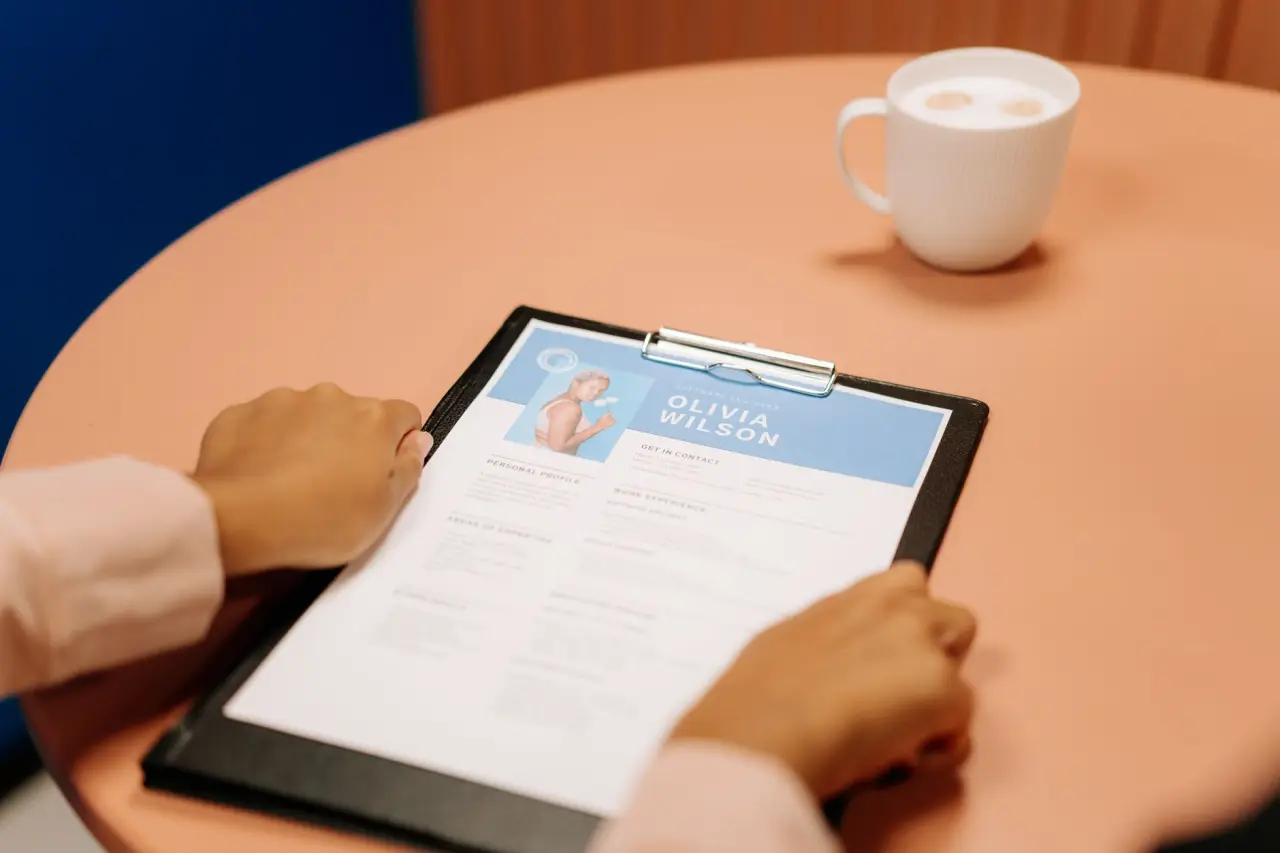
Writing an Australian-style resume is the first skill most Vietnamese people need to master when they start job hunting after migrating. How to write an Australian-style resume differs quite a lot from the familiar CV format in Vietnam, in length, layout and how employers read applications. In this article, the My Second World team compiles the standard structure, how to present each section, and common mistakes, so you have a compelling resume from your very first job application in the Australian labour market.
How an Australian-style resume differs from a Vietnamese CV
Before you start writing, you should understand why resumes in Australia are presented in their own particular way. Understanding this mindset helps you avoid mechanically copying an old template from home.
In Australia, “resume” and “CV” are generally used interchangeably in civilian recruitment. This document focuses on experience, skills and professional achievements, rather than a lengthy personal history.
The biggest difference lies in the personal information section. Australian employers follow fair recruitment principles, so a resume does not need a photo, date of birth, marital status or religion. Including this information can sometimes even work against your application.
In addition, Australians value conciseness and concrete evidence. A good resume is usually kept to 2 to 3 pages, with every bullet point showing a measurable result rather than just listing generic duties.
The structure of a standard Australian-style resume
A well-regarded Australian-style resume usually has a clear layout that is easy to scan within the first few seconds. Below are the core sections, arranged in the most common order.
- Contact information. Full name, Australian phone number, a professional email address and the city where you live. You should add your LinkedIn link if your profile is complete.
- Professional summary. A 3 to 4 line paragraph highlighting your role, years of experience and key strengths, placed right below the contact section.
- Key skills. List 6 to 10 core skills directly relevant to the position you are applying for, including both technical and soft skills.
- Work experience. Presented in reverse chronological order, with your most recent job first.
- Education. Degrees, vocational training courses and certificates that are currently valid in Australia.
- References. You can write “available on request” or provide 2 referees when the employer asks for them.
The order above can be flexible depending on the industry. However, the fixed rule is to put the most important and relevant information first, since employers often only skim the first page before deciding whether to keep reading.
How to write each important section of an Australian-style resume
Once you understand the overall framework, you need to know how to phrase the content persuasively. This is the part that determines whether your application gets you invited to an interview.
For the professional summary, write it like a brief introduction that focuses on the value you bring. For example, state your role, industry, years of experience and one standout achievement, instead of clichéd phrases like “hard-working, eager to learn”.
The work experience section is the heart of the resume. Each position should clearly state the job title, company name, location and duration in month/year format.
Under each job entry, use bullet points that start with an action verb and include a number that proves the result. Compare the two examples below to see the difference.
| Weak phrasing | Australian-standard phrasing |
|---|---|
| In charge of sales | Increased regional sales by 15% in 6 months by managing 40 key accounts |
| Worked in the warehouse | Managed inbound and outbound processing of 500 orders a day, reducing inventory errors by 10% |
| Supported the technical team | Coordinated a team of 5, cutting incident resolution time from 48 to 24 hours |
The version on the right is stronger because it shows employers a real, measurable outcome. So whenever you describe a job, ask yourself: what measurable change did this create?
Use the right keywords and tailor your resume to each job ad
An important fact is that many Australian employers use automated resume-screening software (an Applicant Tracking System) before a human ever reads it. This software scans for keywords to select suitable applications.
So you should read the job ad carefully and naturally work in the exact professional keywords it uses. If the ad calls for “customer service” and “inventory management”, your resume should clearly reflect both terms if you genuinely have the matching experience.
However, do not stuff in keywords artificially. Experienced recruiters can easily spot a resume that lacks substance, and that backfires right at the interview stage.
In addition, each position should have its own tailored resume. Fine-tuning the summary and the order of your skills to match each job ad significantly increases your chances of being called for an interview.
The role of a cover letter alongside your resume
In the Australian market, most positions still expect applicants to submit a short cover letter. This is your chance to tell the story your resume cannot fully convey.
An effective cover letter is usually about one page long and split into three parts. The opening states the position you are applying for and why you are interested, the middle connects your experience with the job requirements, and the closing expresses your wish to discuss further.
It is important that the cover letter complements your resume rather than repeating it verbatim. Choose one or two standout achievements and go deeper into the context, the actions taken, and the results.
In addition, the letter should be personalised for each company. A generic letter sent out in bulk is usually spotted immediately and reduces the recruiter’s goodwill.
Qualifications, skills, and the context of the Australian labour market
When newly settled, many people wonder whether their Vietnamese qualifications and experience will be recognised. This directly affects how you present the education section.
For some occupations, a skills assessment result or qualification recognition was already obtained during the skilled visa application process. If you have this, you should state it clearly on your resume, as it is a significant plus for Australian employers.
Understanding the overall labour market picture also helps you position your resume better. According to the Australian Bureau of Statistics (ABS), hiring demand is unevenly distributed across industries and states, so choosing the right industry and region has a major impact on how quickly you find a job.
In addition, your working conditions in Australia are tied to the type of visa you hold. You can look up the work rights attached to each visa subclass via the Department of Home Affairs to make sure your application matches your actual residency status.
Common mistakes that get a resume rejected
Even with good experience, a poorly presented resume is easily overlooked. Below are common mistakes newcomers tend to make.
- Including a photo, date of birth, or marital status on the resume — out of step with Australian hiring culture.
- Writing too long a resume, exceeding 3 pages with a lot of information irrelevant to the position.
- Listing only duties without stating results or specific numbers.
- Using a single resume for every position without tailoring it to each job ad.
- Spelling or English grammar errors, or messy formatting with inconsistent fonts.
- An unprofessional email address or a phone number that is not an Australian number, making you hard to reach.
Most of these mistakes can be fixed by careful proofreading and having a native speaker review it. So before sending, you should take the time to check your entire application at least once more.
Tips for finalising and checking your resume before submitting
After finishing the draft, a few final review steps will make your application noticeably more polished. This is a step many people skip, yet it makes a real difference.
First, save the file as a PDF with a clear name, for example “Name-Resume-Position.pdf”. This format preserves the layout on whatever device the employer uses.
Next, check that the font, font size, and spacing between sections are consistent. A neat, even layout creates a professional impression from the very first glance.
Finally, have someone experienced in Australia, or fluent in English, proofread it. They can catch wording issues you might not notice yourself and suggest phrasing that feels more natural to the local culture.
Summary
Writing an Australian-style resume requires you to rethink how you present your application: concise, focused on measurable results, and free of unnecessary personal information. A strong application includes a sharp professional summary, an experience section rich in numbers, skills that match the job ad, and a personalised cover letter.
Next steps: build a base resume following the structure above, then create tailored versions for specific positions, while checking the work rights attached to your visa. If you need structured support planning your settlement and entry into the Australian labour market, the migration consulting team at My Second World is always ready to accompany you on your journey to settle down and grow your career in Australia.