Migration for chefs is a route of interest to many people working in the culinary trade in Vietnam, as it is one of the few hands-on skilled occupations that can readily score points abroad. This article neutrally compares two popular destinations, Australia and Canada, to help you clearly picture your path.
The culinary trade has a rare advantage: it is both among the occupations short on workers in many developed countries, and assessed mainly through real experience and practical skill rather than academic credentials. Because of this, Vietnamese chefs often have broader opportunities than many other fields. However, each country has its own approach to occupation classification, skills assessment and the path to permanent residence. Understanding this difference correctly helps you choose a path that fits your profile.
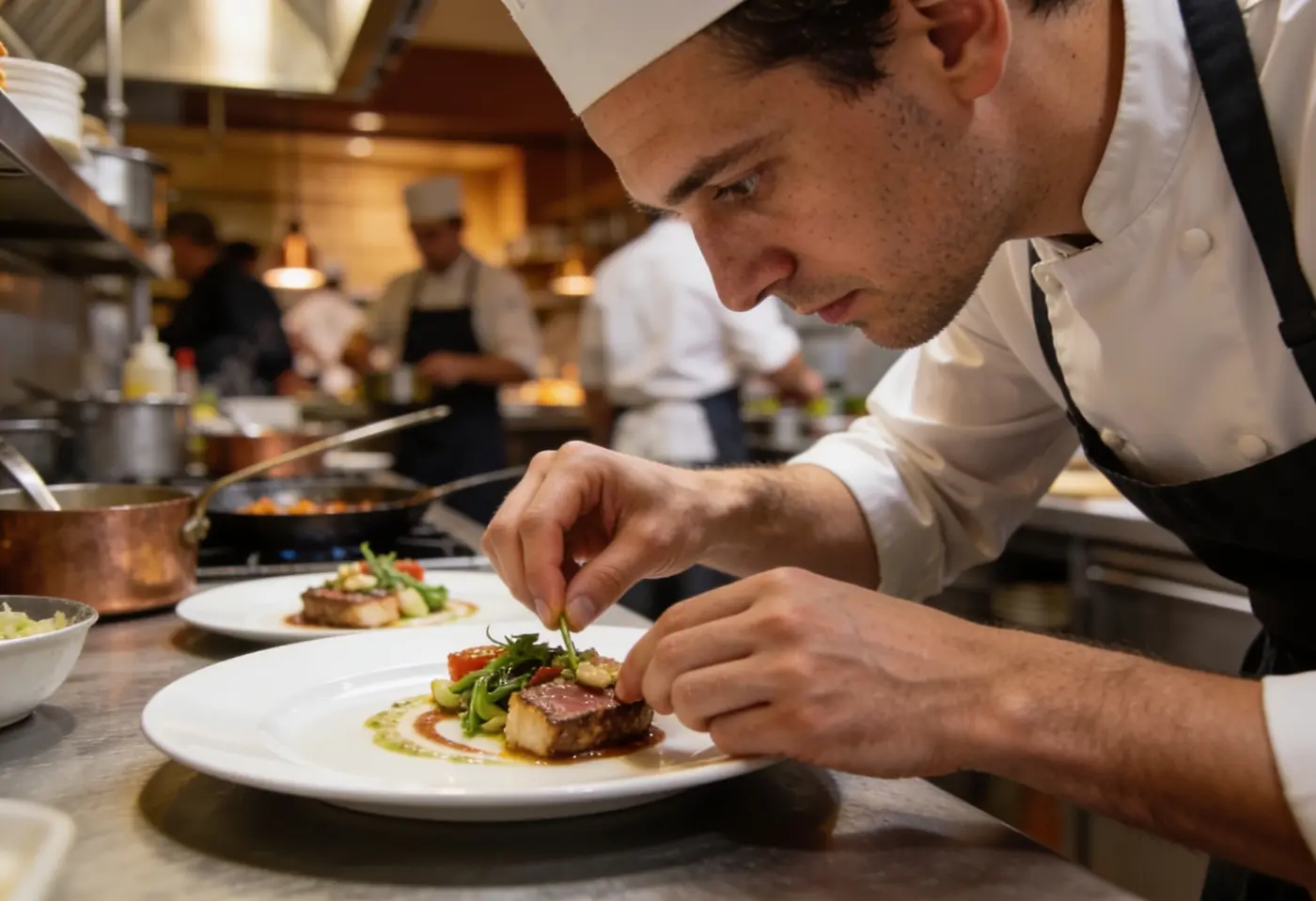
migration for chefs — illustrative image.
Contents
How the culinary trade is classified in each country
Both Australia and Canada use occupation code systems to determine whether a job qualifies for migration sponsorship. This is the first and most decisive step, since if your occupation is not on the relevant list, the subsequent steps are meaningless.
In Australia, the culinary trade is split into several distinct groups. There is a clear distinction between “cook” (someone who prepares food from recipes, running the kitchen at a basic level) and “chef” (a highly skilled culinary professional capable of designing menus and managing the kitchen). This distinction directly affects the occupation list you can apply under and the corresponding visa type. Those in a highly skilled chef role usually have more visa options.
In Canada, the culinary trade is arranged in the National Occupational Classification system with separate codes for chefs and cooks. Canada also tiers occupations by skill level and responsibility. Some programs prioritize occupation groups with clear skills and experience, while there are still pathways for workers at lower skill tiers, especially through programs run by individual provinces.
An important common point: in both countries, the more you can demonstrate a highly skilled role and real experience, the more doors open for you. Preparing a complete occupational file is therefore the foundation for any pathway.
Skills assessment and trade recognition for chefs
One of the biggest differences between the two countries lies in the skills assessment step. This is a stage where many Vietnamese chefs can easily get stuck if they don’t prepare early.
In Australia, chefs usually must go through a skills assessment process conducted by a designated assessing authority before applying for a skilled visa. This process may include a review of work experience, trade qualifications, and in many cases a direct practical skills assessment. The goal is to confirm that your skills are equivalent to Australian standards. You can refer to official information on the visa and occupational requirements at the Australian Department of Home Affairs.
In Canada, chefs are not always required to undergo a skills assessment in the same way. Depending on the program, you may need a credential equivalency assessment or a trade certification at the provincial level, especially if the culinary trade is classified as a regulated occupation in that province. The general skilled immigration mechanism is published by IRCC (Immigration, Refugees and Citizenship Canada).
In other words, Australia tends to standardize the culinary skills assessment step at the national level, while Canada is more flexible and depends heavily on the program and the province you are aiming for.
How work experience is counted
Both countries value continuous work experience, which can be proven with employment contracts, pay slips, employer confirmation letters and specific job descriptions. A clear, well-documented experience file is often worth much more than qualifications alone. Vietnamese chefs should keep occupational records systematically from the time they are still working in the country.
A quick comparison of the migration path for chefs in the two countries
The table below summarizes the main differences. This is a qualitative comparison to help you picture the overall situation; specific conditions always need to be checked at official sources at the time of application.
| Tiêu chí | Úc | Canada |
|---|---|---|
| Culinary trade classification | Clear split between cook and chef; directly affects the occupation list | Occupation code under the national classification system, tiered by skill |
| Skills assessment | Usually mandatory through a designated occupational assessing authority | Depends on the program and province; not always mandatory |
| Role of the locality | States/territories have their own sponsorship programs, prioritizing shortage occupations | Provinces have nominee programs with their own criteria and occupation lists |
| English requirement | English proficiency required, varying by visa category | Language required; English or French accepted |
| Path to permanent residence | Some visas lead directly to permanent residence; others are temporary before transitioning | Many pathways start as temporary residence, then move to permanent residence consideration |
The key point to remember is that no country is absolutely “easier.” Australia has a rigorous but transparent and clear skills assessment process from the outset. Canada is more flexible with a wider variety of pathways, but that very diversity requires you to carefully research the program that fits your profile.
The role of English and trade qualifications
For chefs, many people worry about their language proficiency. In reality, both Australia and Canada require a certain level of English for skilled migration streams, but the requirement for hands-on trades like cooking is usually not as high as for office-based professional fields. This makes the culinary trade a practical option for many workers.
As for qualifications, you do not necessarily need a university degree. Vocational certificates, culinary training certificates, and especially hands-on work experience are the core factors. If you are interested in pathways that do not require a university degree, you can refer to the article Migrating without a university degree for a broader view across all four countries.
Some chefs choose to study a vocational program abroad or work temporarily first, then build up local experience before transitioning to permanent residency. This approach helps improve language proficiency while gaining local experience that is highly valued. It is a common strategy in both countries.
The local factor: states in Australia and provinces in Canada
Both countries give significant authority to local jurisdictions in attracting workers. This is a factor chefs often overlook, yet it can make a major difference.
In Australia, states and territories run their own sponsorship programs, usually prioritizing occupations in local shortage. A chef may not be in demand in a major city but could be welcomed in a regional area. Living and working in a regional area can sometimes even earn extra points on the application.
In Canada, each province runs its own nomination program with different occupation lists and criteria. Some provinces specifically need food service workers, while others focus on different industries. Choosing the right province for the culinary trade can significantly shorten the path to permanent residency. Some provinces also have programs targeting small communities and rural areas, where the demand for culinary workers is very real.
How to choose the right location
You should identify where your culinary trade is most needed, rather than choosing based on a famous city alone. Targeting a location that is short on culinary workers both increases your chances of sponsorship and helps you find work faster after arrival.
The path from working to permanent residence and citizenship
For both Australia and Canada, chefs generally take one of two routes: applying directly for permanent residency if their profile is strong enough, or starting with a temporary stay and building up the conditions needed to transition to permanent residency. The second route is more common for those who do not yet have enough points or need local experience.
Once you have permanent residency, both countries offer a pathway to citizenship after a certain number of years of eligible residence. If you are interested in the ultimate destination of a passport, you can read more in the article the pathway to citizenship to compare between countries.
Chefs should also think about family from the outset. Both countries allow spouses and children to accompany the applicant under skilled migration streams, subject to their own conditions. You can refer to the article Bringing family along when migrating to consider this factor. If you are torn between several countries, the article choosing a country for skilled migration will give you an overall framework for thinking about it.
Preparing your culinary trade file while still in Vietnam
Most of the risk of a chef’s application failing lies not in their skill but in their paperwork. Immigration authorities and skills assessment bodies both work from evidence, so a skilled chef who lacks supporting documents will be at a major disadvantage. For this reason, document preparation should begin while still working domestically, as early as possible.
A convincing culinary application file usually includes the following components. First is evidence of experience: employment contracts, hiring decisions, monthly payslips, and a confirmation letter from the restaurant owner stating the position, employment period, and a specific job description. The job description needs to clarify what role you held in the kitchen, whether you managed staff, and whether you were responsible for the menu, since this determines whether you are classified as a cook or a chef.
Next are qualifications and vocational certificates. If you hold an intermediate or vocational college diploma in culinary arts, a culinary training certificate, or a food safety and hygiene certificate, keep the originals and prepare notarized translations. These documents do not replace experience but significantly strengthen the application.
Finally, there is proof of actual skill. Some assessment processes may require demonstrating skills directly, or through photos and videos of dishes, or menus you have designed. Building a visual professional portfolio early will be very useful when entering the skills assessment stage.
Common mistakes that weaken an application
Vietnamese chefs often make a few avoidable mistakes. The most common is working for years without an official contract or payslips, which makes it hard to have their experience recognized. The second is writing a job description that is too generic and fails to highlight their professional role. The third is waiting until right before submission to gather old documents, by which time the former restaurant may have closed or no longer kept records. Starting early and keeping systematic records is the most effective way to avoid these pitfalls.
A qualitative comparison of cost and time
Many chefs are concerned about cost and timing, but these two factors change constantly, so you should not rely on fixed figures. Instead, you should understand the cost structure and the factors that affect processing time.
In terms of cost, both countries involve similar expenses: skills assessment fees, language test fees, visa application fees, translation costs, and medical examinations. There are also initial living costs after arrival. You should check the current fee levels on each country’s official sources and budget with a contingency amount.
As for timing, processing speed depends on the visa stream, how complete the application is, and the intake situation at the time of submission. The more complete and clear the application, the less likely it is to receive requests for additional information, which shortens processing time. If you want a broader comparison of processing speed across countries, you can refer to the article comparing processing times across 4 countries and for the overall budget, the article comparing settlement costs across 4 countries.
Summary
Migrating as a chef to Australia or Canada is a practical and viable direction, as long as you carefully prepare your professional file and choose the right pathway. Australia stands out for its clear skills assessment process, while Canada stands out for its variety of programs and the role of the provinces. Neither country is absolutely better; the right choice depends on your experience, language proficiency, budget, and your family’s long-term goals.
References
- Australian Department of Home Affairs (immi.homeaffairs.gov.au)
- IRCC – Immigration, Refugees and Citizenship Canada (canada.ca)
This article is compiled from government sources. Immigration regulations and figures may change over time; you should check current information on the official website before making a decision.
Do Vietnamese chefs need a university degree to migrate to Australia or Canada?
No. The culinary trade is assessed mainly through practical experience and vocational qualifications or certificates. A university degree is not a mandatory requirement for skilled migration in the culinary field.
Does the difference between “cook” and “chef” matter?
Yes, especially in Australia. A higher-skilled role (chef) usually opens up more visa options than a basic cooking role (cook), so correctly identifying your role in the application is very important.
What level of English do chefs need?
Both countries require a certain level of English depending on the visa stream, but for hands-on trades like cooking, the requirement is usually lower than for office-based professional fields. You should check the current requirement for the stream you are applying under.
Should I choose a major city or a regional area?
A regional area or province that is short on culinary workers usually offers better sponsorship opportunities and can sometimes earn extra points on the application. Choosing the location where the culinary trade is most needed is more practical than choosing based on a famous city.
Can I bring my family along?
Yes. Both Australia and Canada allow chefs to bring their spouse and children under skilled migration streams, subject to their own requirements for documentation and proof of relationship.