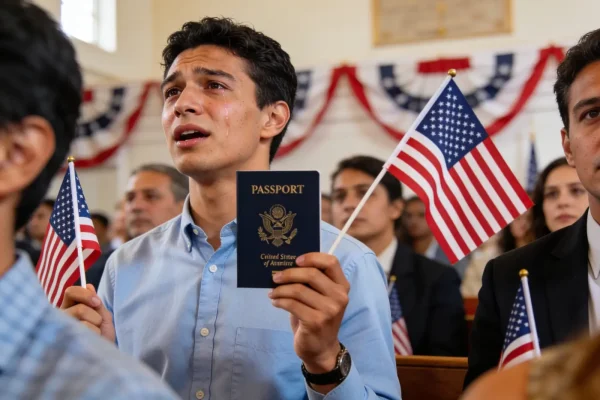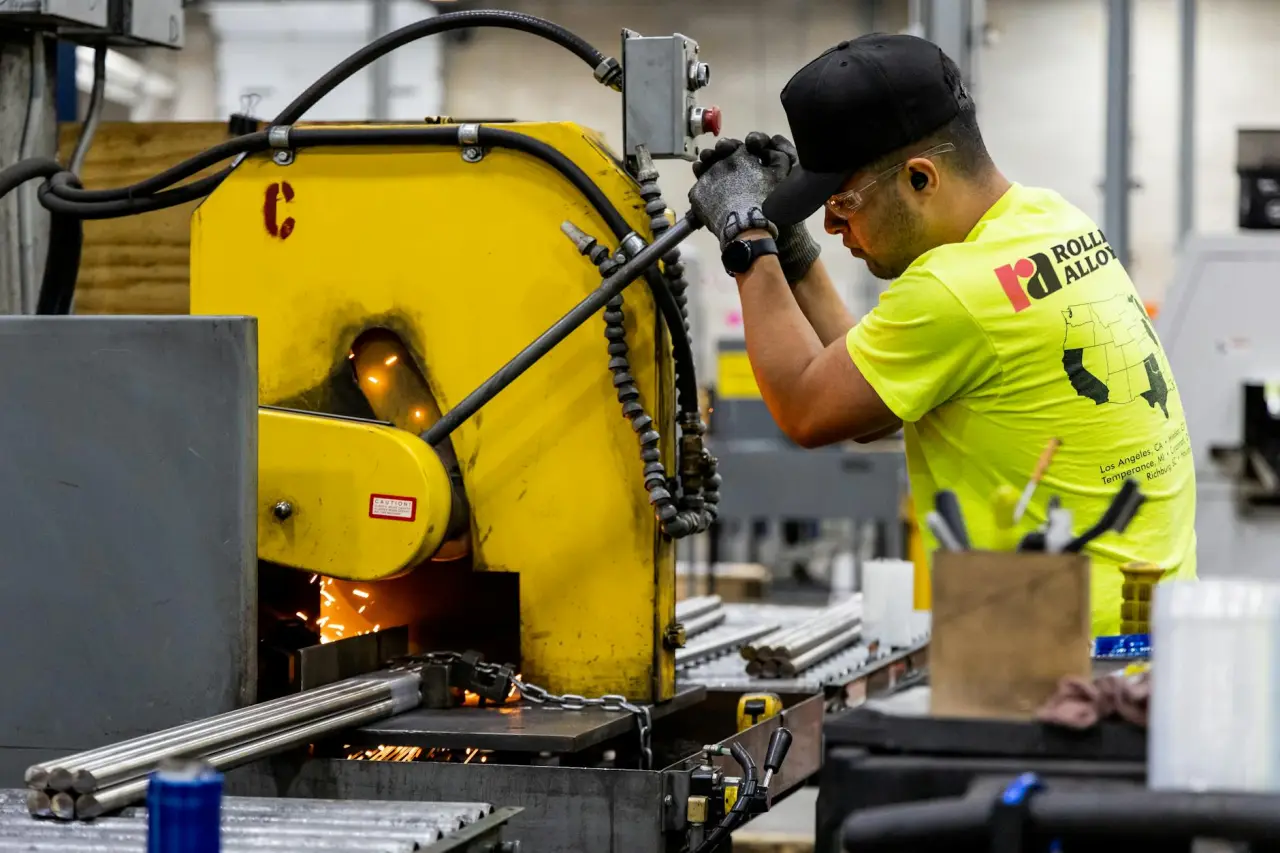
Skilled settlement without a university degree is a major concern for many Vietnamese workers who want to live abroad long-term but do not yet hold a bachelor’s degree. The good news is that a university degree is not a mandatory requirement in many skilled settlement programs. You can fully obtain legal permanent residence based on trade skills, work experience or a vocational training certificate.
In this analysis, the M2W team presents the 3 most realistic pathways today: US EB-3, Australia’s skilled category, and German skilled labor. Each pathway has different requirements, costs and timelines, but all are open to people without a university degree.
What does skilled settlement without a university degree mean
Two concepts need to be clearly distinguished: university degree (a bachelor’s degree or higher, 4 years or more) and vocational qualification (vocational training, skills certificates, practical experience). When we say skilled settlement without a university degree, we mean you do not need a bachelor’s degree, but you still need to prove your work capability in the way each country requires.
There are three common profile groups for people without a university degree. The first group is general labor, doing jobs that do not require lengthy training. The second group is skilled tradespeople, with skills recognized through certificates or experience. The third group is people willing to learn a new trade right in the destination country.
The common feature of all three groups is that the receiving country is short of labor in manual and service industries. So they design dedicated programs to attract skilled workers, even those who have never attended university.
The first pathway: US EB-3 for general and skilled labor
EB-3 is the third preference category among US employment-based immigrant visas. According to U.S. Citizenship and Immigration Services (USCIS), EB-3 is divided into 3 subcategories, of which two suit people without a university degree.
EB-3 Other Workers
This subcategory is for jobs that do not require high skill, with training under 2 years. Workers do not need a degree or prior professional experience. Common positions include kitchen helpers, food processing workers, industrial cleaners, and farm laborers.
In return, the Other Workers subcategory has a separate, narrow quota of only about 10,000 slots per year out of a total of about 40,000 EB-3 visas. The narrow quota means the wait time is usually longer than other subcategories. This is a point you need to consider when choosing this path. You can read a more detailed analysis in the article EB-3 Other Workers.
EB-3 Skilled Workers
This subcategory is for people with at least 2 years of vocational training or work experience in the field. Like Other Workers, EB-3 Skilled Workers does not require a university degree, only proof of trade skills. Welders, mechanics, electricians, and experienced cooks are typical examples.
Since it has a larger quota than general labor, the skilled subcategory usually processes a bit faster. To know which group you fall into, you should check against the latest EB-3 requirements và danh sách EB-3 occupations easy to apply for for Vietnamese workers.
EB-3 process and processing time
An EB-3 case always starts with a US employer sponsoring it. The employer must apply for PERM Labor Certification at the U.S. Department of Labor (DOL), to prove they could not find a local worker for that position.
After obtaining PERM, the employer files Form I-140 (labor petition) with USCIS. Once the I-140 is approved and the Priority Date becomes current according to the Visa Bulletin, the worker completes Form DS-260 and attends an interview at the US Consulate. The whole process usually takes several years, depending on the annual quota and the backlog of cases.
The second pathway: settling in Australia for skilled tradespeople
Australia is the country with the clearest skilled settlement system designed for tradespeople. Many occupations on Australia’s settlement list are manual trade occupations that do not require a university degree. Electricians, plumbers, carpenters, welders, cooks and builders are all in this group.
The key element of the Australian pathway is skills assessment . Instead of reviewing a university degree, Australia requires a designated organization to check your trade certificates and practical experience. For trade occupations, the assessing authority usually requires a level equivalent to an Australian Certificate III or IV plus a number of years of experience. You can learn more in the article Skills Assessment Úc.
After passing the skills assessment, the application moves to the points-testing stage. Candidates need to reach a minimum of 65 points on the settlement points scale, based on age, experience, English level and other factors. The common visas are Skilled Independent (subclass 189), Skilled Nominated (subclass 190) and Skilled Work Regional (subclass 491).
English proficiency is the biggest barrier for Vietnamese workers, as Australia requires a minimum Competent level (usually equivalent to IELTS 6.0 in each skill). On the plus side, wages in the construction and mechanical trades in Australia are quite high and hiring demand is stable. You can find more specific opportunities in the article settling in Australia in construction.
The third pathway: German skilled labor through vocational training
Germany is facing a severe labor shortage and is opening many doors for people without a university degree. Unlike the US and Australia, Germany’s strength is allowing you to go to Germany to train in a trade and then stay to work, instead of needing to already have the trade skills beforehand.
The clearest pathway is the Ausbildung vocational training program. This is a dual training system, combining paid work and study, lasting 2 to 3 years. Trainees do not need a university degree, only a high school diploma, basic German, and a training placement. After graduating, the trainee can stay to work and progress toward permanent residence. You can read the details in the article Ausbildung Germany 2026.
For those who already have trade skills, Germany recognizes qualifications through a vocational qualification recognition procedure. According to the official portal of the German Government (Make it in Germany), a vocational training certificate of 2 years or more is recognized as sufficient for a skilled work visa, without requiring a university degree.
In addition, Germany’s IT sector has its own separate provision. Experienced IT specialists can apply for a work visa without a university degree, as long as they can prove practical competence. Interested readers can see the article Germany IT visa. For those who want to go to Germany to look for a job first, the Opportunity Card Chancenkarte scores based on vocational qualification, experience and language ability, is also an option worth considering.
One important note: German is almost mandatory for most of this pathway. Most programs require a German level of at least B1, so you need to prepare your language skills alongside your application.
Quick comparison of the 3 skilled settlement pathways
The table below summarizes the key differences to help you visualize them easily.
| Tiêu chí | US EB-3 | Australian skilled category | German labor |
|---|---|---|---|
| University degree required | None | None | None |
| What is needed instead | Employer sponsorship | Skills assessment + points | Vocational training / trade recognition |
| Language | No test required | English Competent | German B1 or higher |
| Strengths | Direct Green Card issuance | High salary, clear pathway | Allows working while studying |
| Points to note | Narrow quota, long wait | English barrier | German required |
You can see that each pathway suits a different group of people. The US EB-3 stands out for granting a Green Card directly and not requiring a language test. Australia and Germany require a language, but in return offer a transparent process and many eligible occupations.
Advice for choosing the right pathway
Based on the real profiles of Vietnamese applicants, the M2W team offers a few suggestions to help you find your direction. If you would rather avoid learning a foreign language and want permanent residence right away, the US EB-3 is a reasonable choice, though you must accept a longer wait.
If you have solid skills and are ready to invest in English, Australian skilled migration offers high income and a clear pathway. And if you are young, without a trade yet but willing to learn, Germany’s vocational training route opens the door to earning a salary while you train.
The most important thing is to accurately assess your own ability and circumstances before deciding. A profile that picks the wrong pathway can waste years and unnecessary cost. That is why we recommend you get specific consultation before applying.
Summary and next steps
Skilled migration without a university degree is entirely feasible through at least three pathways: the US EB-3, Australia’s skilled migration stream, and skilled labor migration to Germany. Each pathway substitutes a university degree with a different requirement, whether that is employer sponsorship, a skills assessment, or on-the-job vocational training.
To find out which pathway best fits your profile, you can use M2W’s free profile assessment tool, or check the cost table for each programbeforehand. Our migration consulting team will accompany you from the very first step.
Read more: Skilled migration overview 2026 · The skilled migration pathway: steps from A to Z 2026